
Burning Yen
Japan’s energy lifeline just got severed. The BoJ is out of options.

Japan’s crisis just got worse.
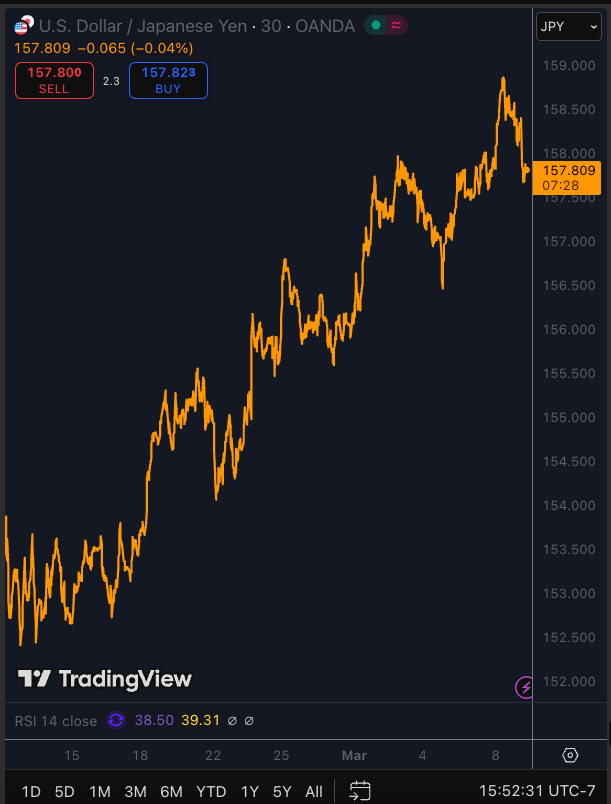
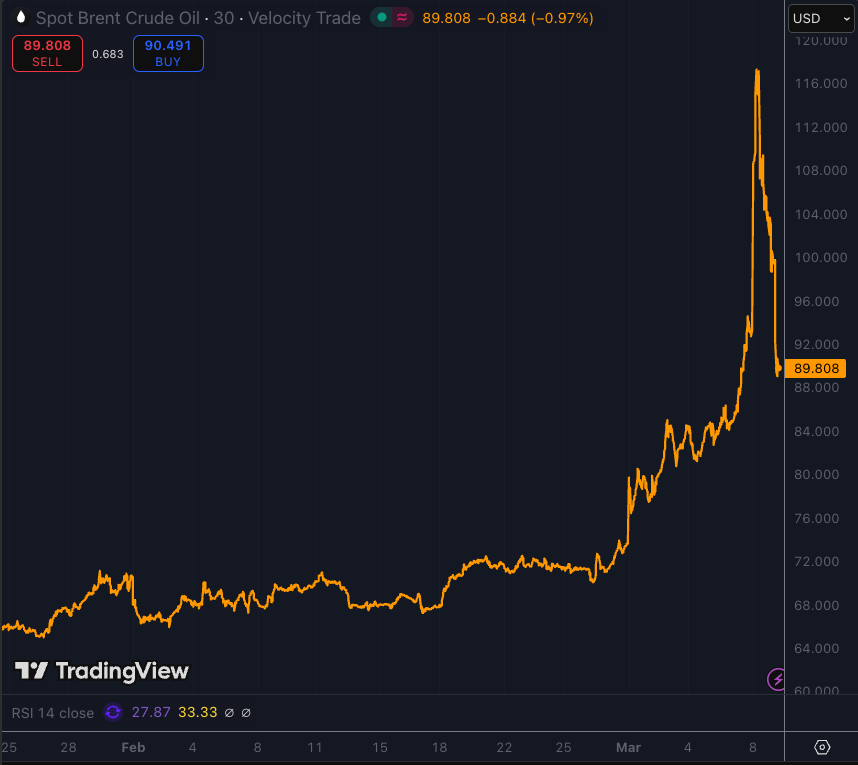
Crude oil crossed $100 a barrel this week for the first time since 2022. On Sunday night, the yen blew past 158.5 to the dollar, hitting six-week lows before retracing slightly. Japanese refiners, staring down the barrel of an energy crisis unlike anything they’ve faced in half a century, are begging the government to crack open the strategic petroleum reserve. This morning it crossed 159.
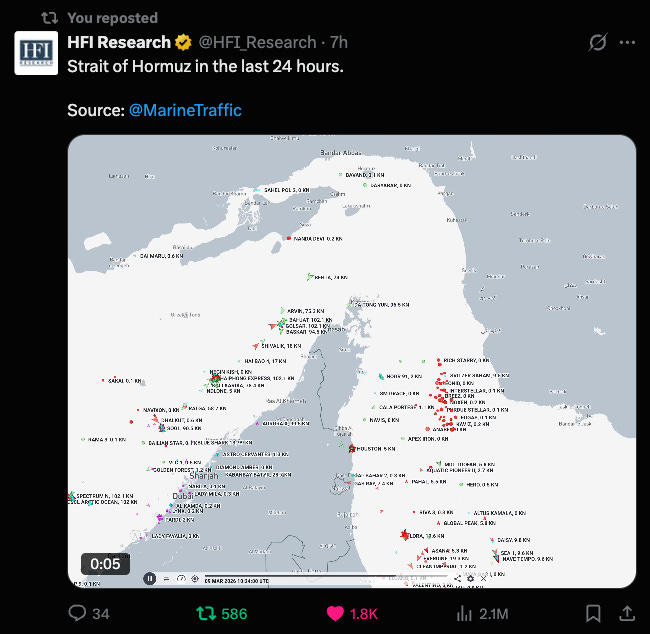
Tanker traffic through the Strait of Hormuz, the narrow chokepoint between Iran and Oman through which roughly 20% of the world’s daily oil supply transits, has collapsed to near zero.
Ninety-five percent of Japan’s crude oil comes from the Middle East. Seventy percent of it passes through that strait.
(See a timelapse of tanker traffic here)
I posted a thread about this on Twitter yesterday. It went viral: over a million views in 24 hours. Not because I said anything particularly new; the energy vulnerability has been there for decades. It went viral because it laid out what most analysts won’t say plainly: Japan has no good options here.
For readers of this Substack, the Japan thesis should be deeply familiar by now. I’ve written about the BoJ’s impossible position in Panic in Tokyo, Drought in the East, Japan Enters Crisis Mode, and The Japanese Maginot Line. The core argument has always been the same: you can save the currency or you can save the bond market; you cannot save both. What the Hormuz crisis does is pour gasoline on a fire that was already burning.
SPONSOR: Bitcoin is freedom money, but only if you control your keys.
Partnering with Bitcoin Well, the world’s first publicly traded non-custodial Bitcoin company, ensures this freedom.
They send Bitcoin directly and instantly to your wallet.
No middlemen. No permission needed. Whether you’re stacking sats or making large moves via their OTC desk (Infinite by Bitcoin Well), you remain in control. Self-custody is essential.

Ready to buy Bitcoin the way it was intended? Head to bitcoinwell.com and enable your independence. Use this link https://app.bitcoinwell.com/signup?referral=peruvianbull to sign up and start stacking today!
Now let’s get back to it!
Brent Crude oil traded as high as $116 on Sunday night before crashing Monday during trading. Europe has announced the release of 400 million barrels of strategic oil reserves.
Japan imports 87% of its total energy from abroad. It produces almost no domestic oil, no meaningful natural gas, and its nuclear fleet has never fully recovered from Fukushima.
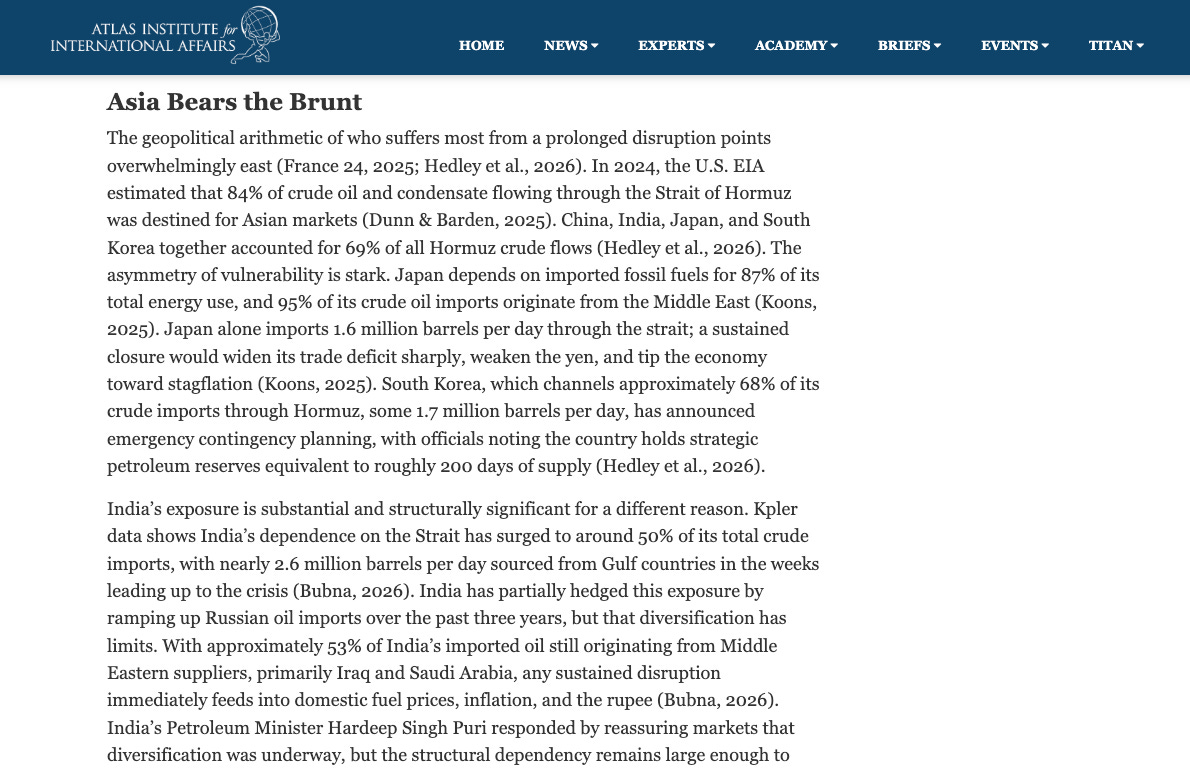
The numbers are stark. According to the Atlas Institute for International Affairs, Japan imports 1.6 million barrels of crude oil per day through the Strait of Hormuz alone. That’s roughly 72% of all Japanese crude oil imports passing through a 21-mile-wide chokepoint that is now, for all practical purposes, a war zone. Zero Carbon Analytics, in a vulnerability analysis published just before the crisis escalated, ranked Japan number one among major economies for risk of supply disruption from the Strait, with a composite risk score of 6.4, well above South Korea , India , and China.
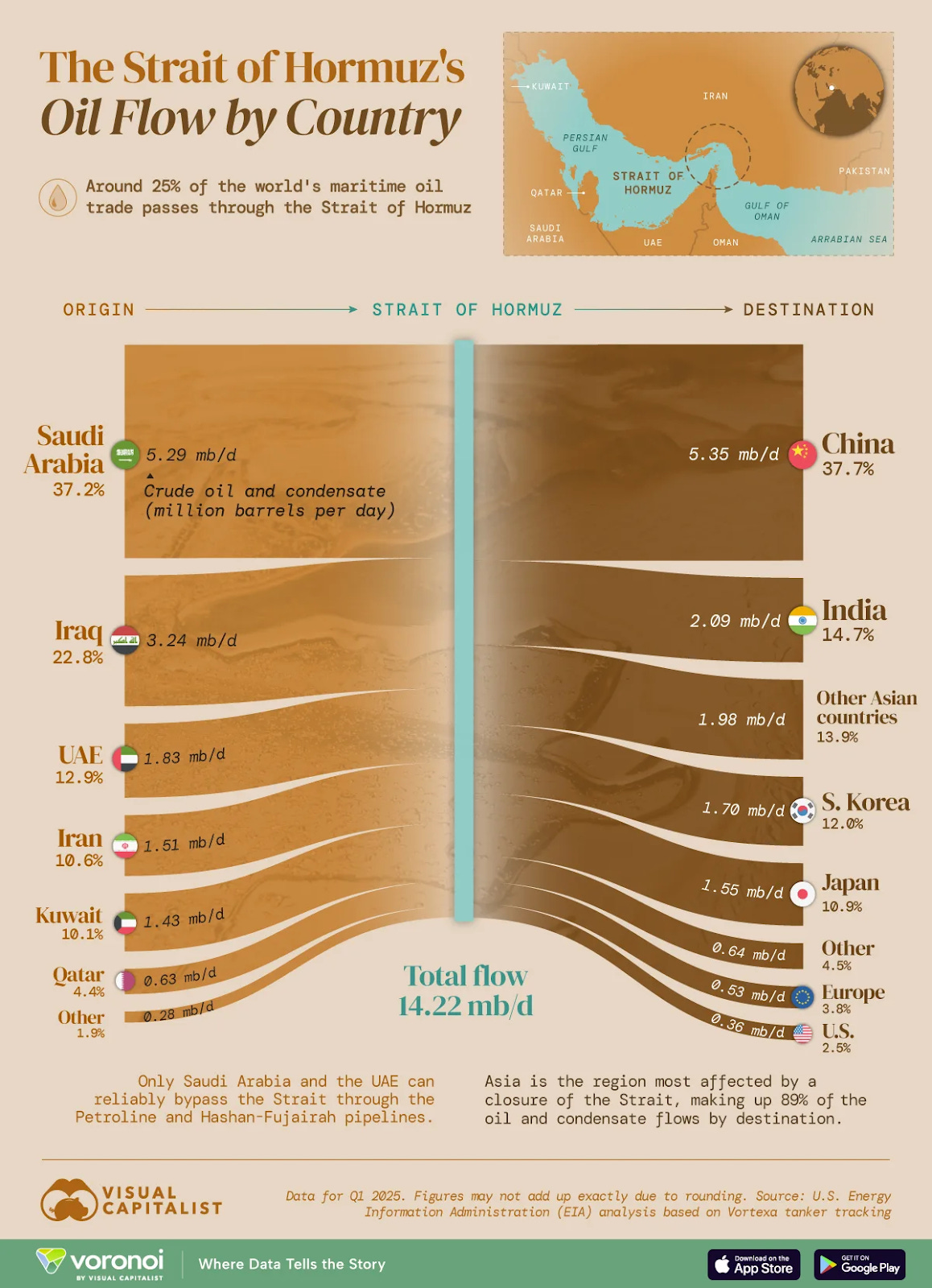
On February 28th, the United States and Israel launched Operation Epic Fury, a coordinated strike campaign against Iranian military installations, nuclear sites, and senior leadership, killing Supreme Leader Ali Khamenei. Iran’s retaliation was swift and broad: missile and drone barrages struck Israeli cities, US military bases across the Gulf, and critical infrastructure in the UAE, Saudi Arabia, Qatar, Bahrain, and Kuwait. The IRGC declared the Strait of Hormuz closed to all shipping and began attacking tankers in the corridor.
Tanker traffic through the Strait collapsed. According to Vortexa data cited by Euronews, crude tanker transits dropped to four vessels on March 1st, compared with an average of 24 per day since January. Three of the four were Iran-flagged. Over 150 ships anchored outside the strait. MSC, Maersk, and Hapag-Lloyd suspended all transits.
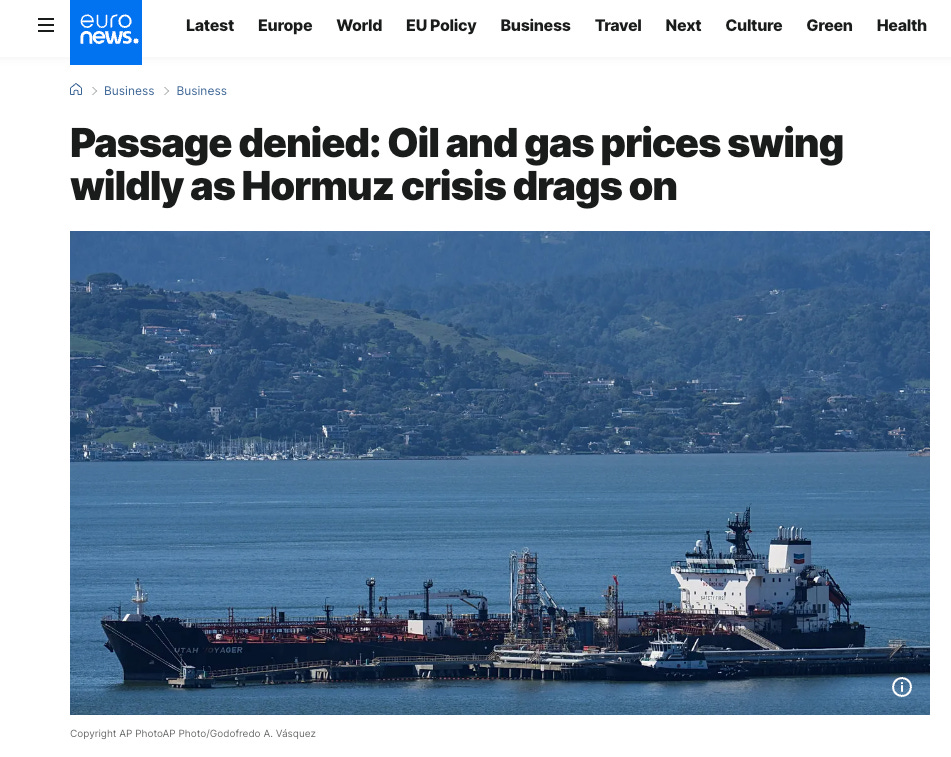
And it’s not just oil. Qatar, one of the world’s largest LNG exporters, halted production at Ras Laffan after Iranian drone strikes hit its facilities.
(I’ve already covered this in previous pieces like The Guns of February)
Japan holds approximately 4.4 million tons of LNG reserves: enough for roughly two to four weeks of stable demand. Four weeks. That’s the buffer between “manageable disruption” and “rolling blackouts in Tokyo.”
Meanwhile, the production side is collapsing too. Kuwait announced precautionary cuts to production and refinery output. Iraqi output from its three main southern oilfields has fallen 70%, from 4.3 million barrels per day to just 1.3 million, according to Reuters. Gulf Arab states are cutting production simply because they’re running out of storage space; crude is piling up with nowhere to go.
SPONSOR:
Taking self-custody of your Bitcoin has never been more critical, and that’s exactly why the team at Blockstream has created the perfect solution: the Jade Plus hardware wallet.

Use Code PB10 for 10% off your JadePlus Wallet! Click the Link here.
The strategic petroleum reserve is more substantial: roughly 260 million barrels of government-held crude, with total reserves (including commercial inventory and joint storage agreements) reaching approximately 440 million barrels, or about 200 days of imports. Sounds like a lot. We’ll come back to why it isn’t.
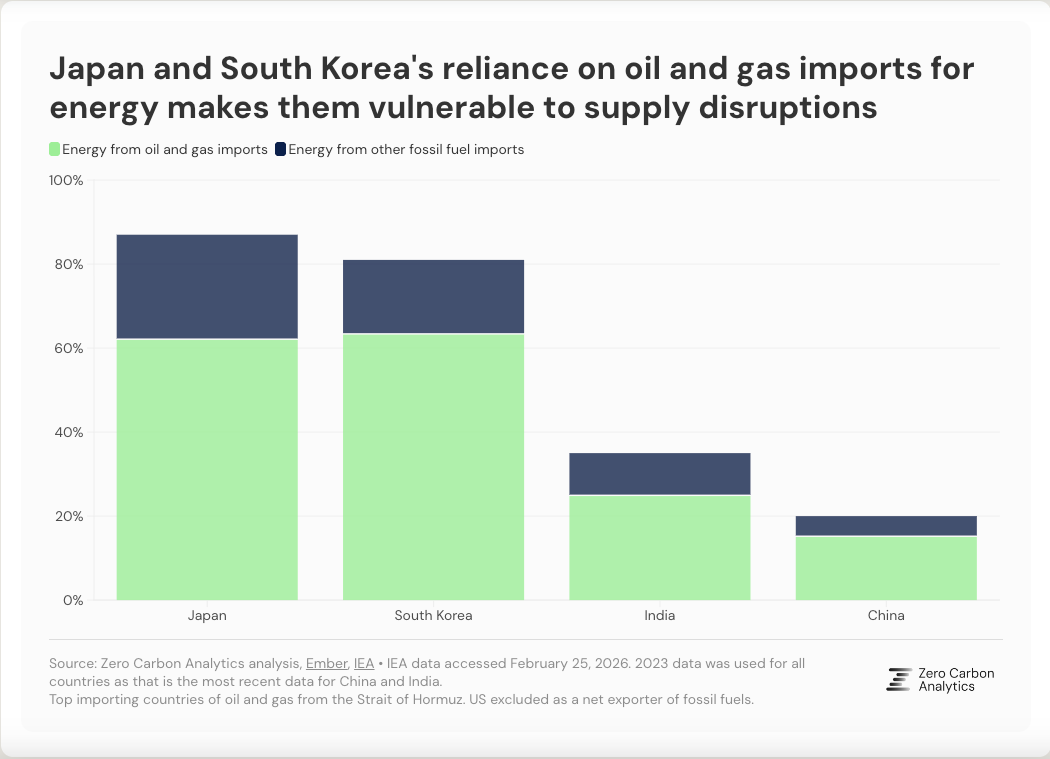
Source: Zero Carbon Analytics / EIA
The reason that tweet resonated isn’t just that oil is getting more expensive. It’s that the currency dynamics create a self-reinforcing spiral.
I already laid this out in a viral tweet that got 1M views last week- but here’s the basic synopsis.
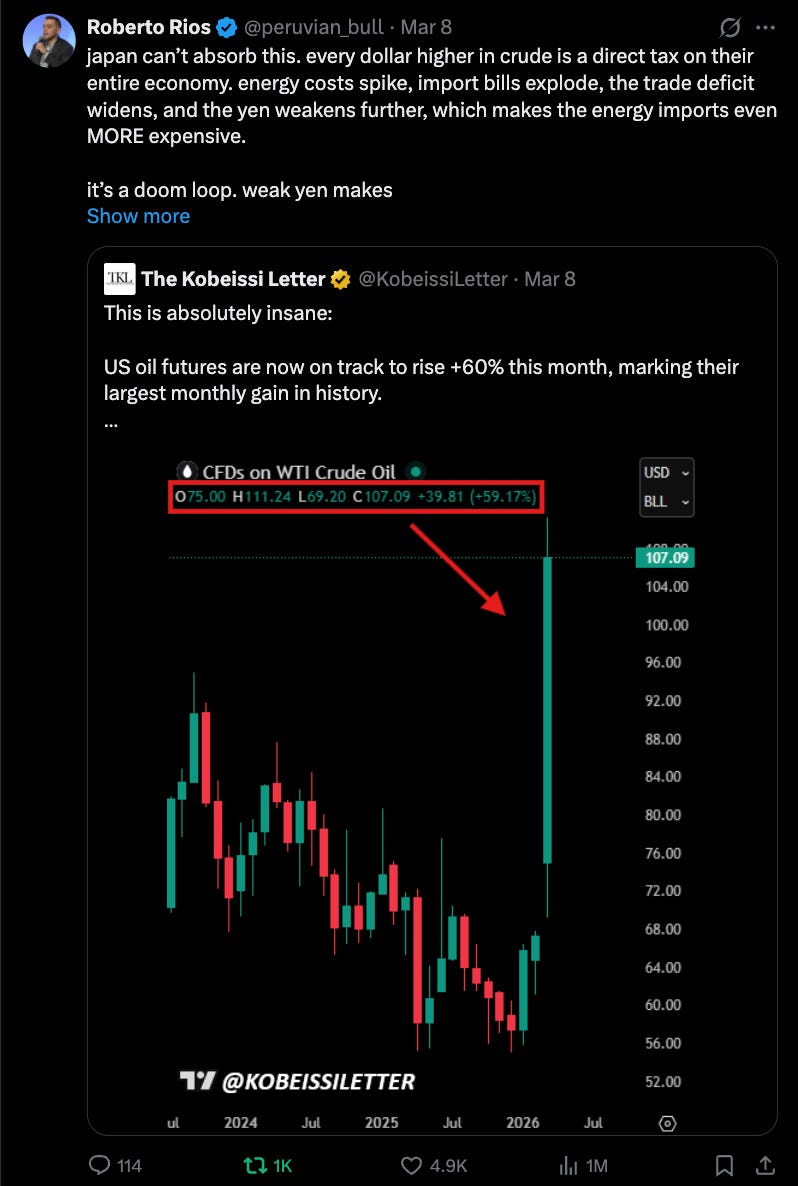
Step one: oil prices spike in dollar terms. Japan buys its crude in dollars. So the import bill explodes. Japan’s trade deficit with the Middle East was already ¥6.9 trillion in 2025, down from prior years only because energy prices had moderated. That moderation is over. With crude at $100 and rising, every single day of imports gets more expensive. Japan’s total crude import volume runs roughly 3.3 million barrels per day; at $100/barrel, that’s $330 million a day in crude alone, before you add LNG, petroleum products, and petrochemical feedstocks. The 2025 annual trade deficit of ¥2.7 trillion, which had been narrowing year-on-year, is about to reverse violently.
Step two: as the trade deficit widens, selling pressure builds on the yen. More yen flowing out to buy dollars for oil imports means the exchange rate weakens. USDJPY has already moved from roughly 152 in mid-February to past 158.5 as of this writing. That’s a 4.3% depreciation in under two weeks, and the move has accelerated since oil breached $100.
Step three (and this is where it gets vicious): a weaker yen means the same barrel of oil, priced in dollars, costs even MORE in yen terms. When USDJPY was at 152, a $100 barrel of crude cost ¥15,200. At 158.5, that same barrel costs ¥15,850. That’s a 4.3% increase in yen-denominated energy costs on top of whatever the dollar-denominated price increase already was. So the trade deficit widens further. Which weakens the yen further. Which makes the next barrel even more expensive.
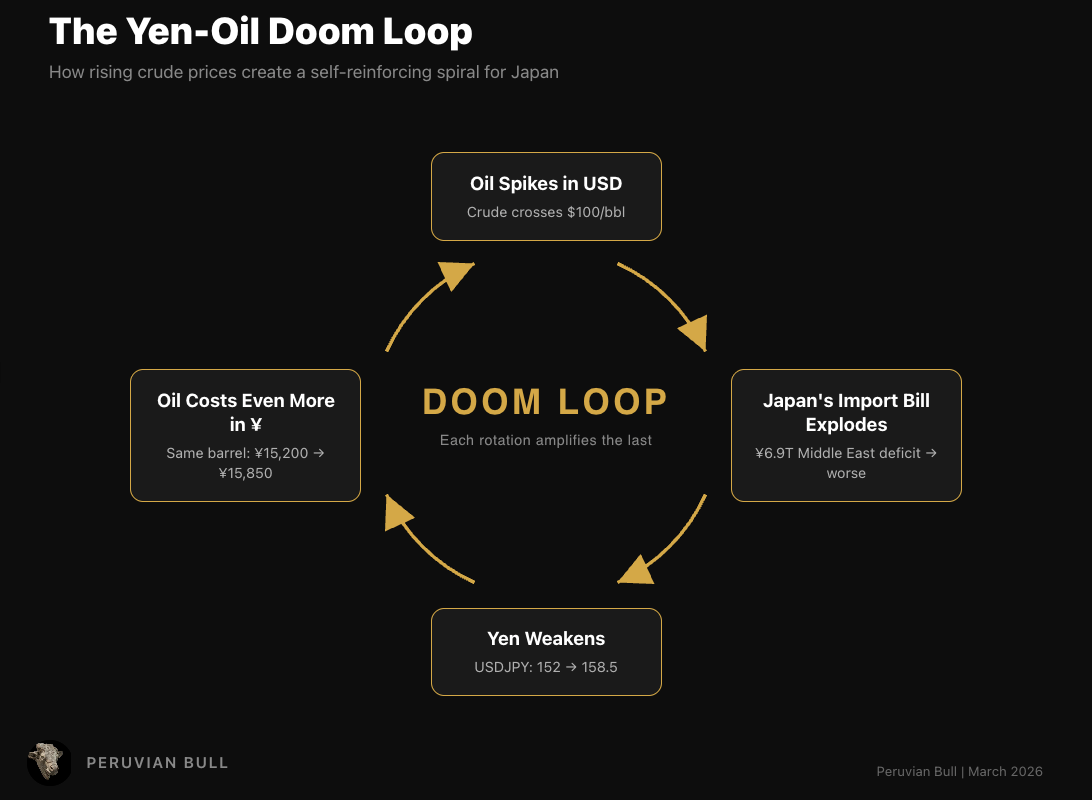
It’s recursive. Each rotation of the loop amplifies the one before it. And unlike a one-time price shock that the economy can absorb and adjust to, this is a dynamic that feeds on itself for as long as the underlying conditions persist: high oil prices denominated in a strengthening dollar, paid for by a weakening yen. The Japanese economy contracted at an annualized rate of 2.3% in Q3 2025, and that was before any of this happened.
