

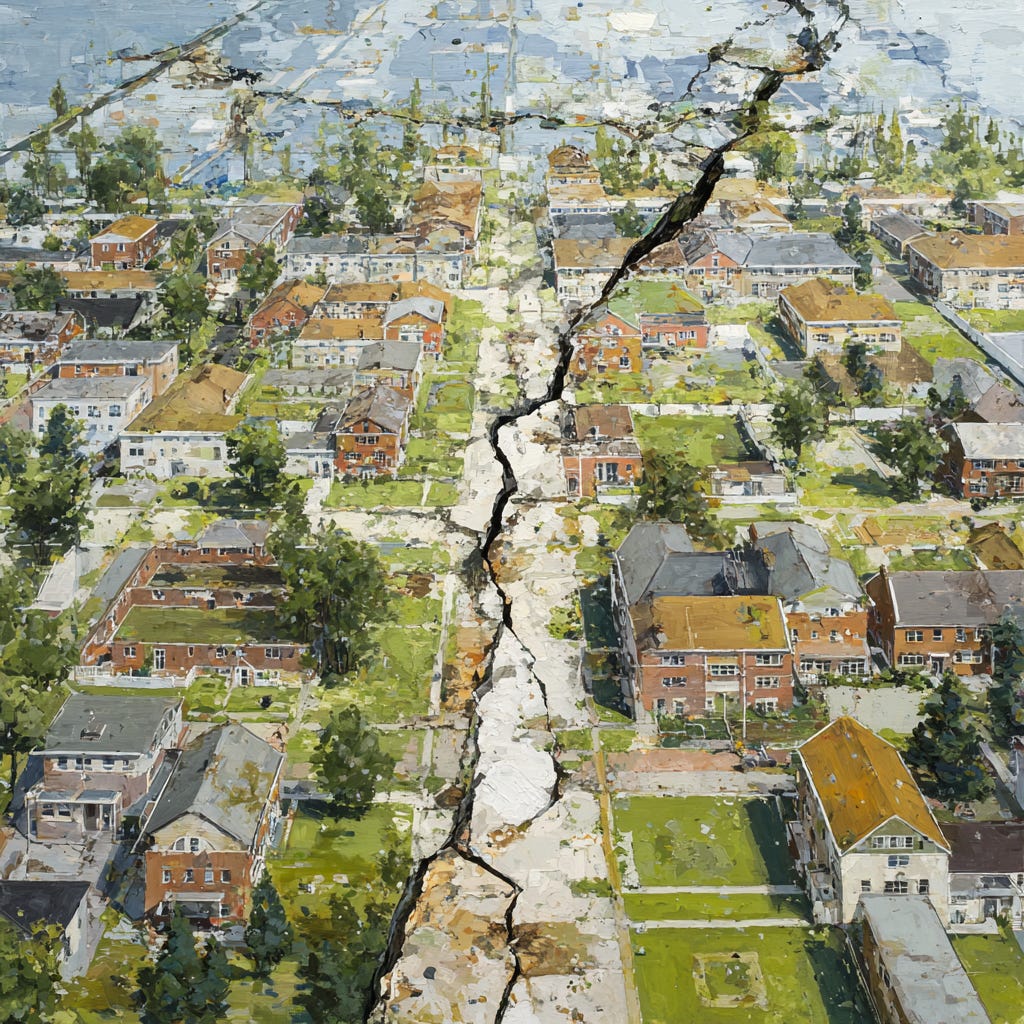
After the Fed pumped trillions into the economy in 2020, home prices naturally exploded across the country. From Seattle to Miami, it felt like real estate could only go up. But that madness has naturally started to cool. Now, we are witnessing homes sitting dormant on the market for far longer, and sales falling as the housing market is quietly fragmenting. I wrote about this just over a month ago in my piece Estate Sale.
So let’s address the question most are asking: are we finally on the edge of another housing crash?
Between early 2020 and mid-2022, U.S. home prices soared over 40%. Cities like Austin, Phoenix, and Boise even saw price increases north of 60%. This wasn’t just a regular bull market, it was full blown mania, driven by some of the most aggressive monetary policy in modern history.
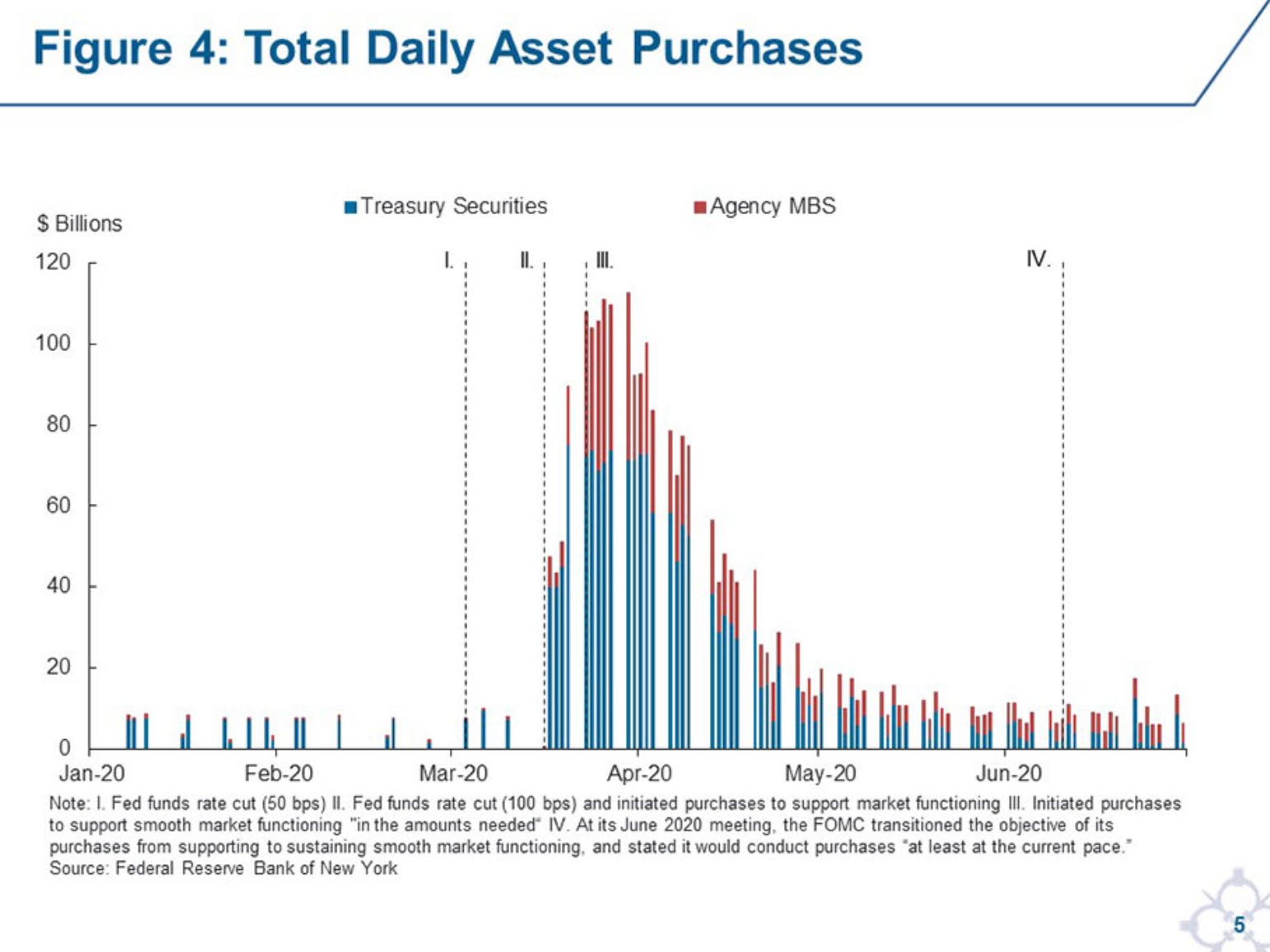
During the pandemic, the Federal Reserve ran $120 billion per month of quantitative easing, including $40 billion of mortgage-backed securities (MBS). Interest rates were pinned to zero, and the Fed quietly added liquidity through stealth QE mechanisms and balance sheet tricks. (I’ve covered this extensively in pieces like Stealth QE and the Quiet Pivot). Yet even with all that, the Fed’s liquidity support ended up not just supporting the housing market, but turbocharging it.
SPONSOR:
Taking self-custody of your Bitcoin has never been more critical, and that's exactly why the team at Blockstream has created the perfect solution: the Jade Plus hardware wallet.
Blockstream Jade Plus is the simplest and most secure way to protect your Bitcoin—whether you're brand new to Bitcoin or a seasoned stacker, Jade Plus has you covered. With its sleek design, intuitive setup, and step-by-step instructions, you'll be securing your Bitcoin in minutes, not hours.
Pair your Jade Plus seamlessly with its dedicated companion app, Blockstream Green, on your mobile or desktop, and experience the easiest onboarding journey you've ever had. As your Bitcoin stack grows, Jade grows with you. Activate advanced features like the air-gapped JadeLink Storage Device, or take advantage of the game-changing QR Mode, letting you securely send and receive Bitcoin with Jade’s built-in camera, no cables needed!
Want even more security? Jade Plus supports multisig wallets using popular apps like Blockstream Green, Electrum, Sparrow, and Specter—giving you ultimate flexibility and peace of mind.

Don’t wait until it’s too late—take control of your Bitcoin now. Get your Blockstream Jade Plus, the all-in-one, Bitcoin-only hardware wallet, today.
Use Code RIOS10 for 10% off your JadePlus Wallet!
https://store.blockstream.com/?code=1e5BsVSePyfs
Now, again, back to the article!
The ultra low rates meant housing credit was accessible to all. Many people who had bought homes in 2017 and 2018 were able to refinance at 0%, giving them even cheaper debt with which to upgrade their home or invest in a new one. New homebuyers flooded into the market, pushing prices upwards and squeezing already tight supply.
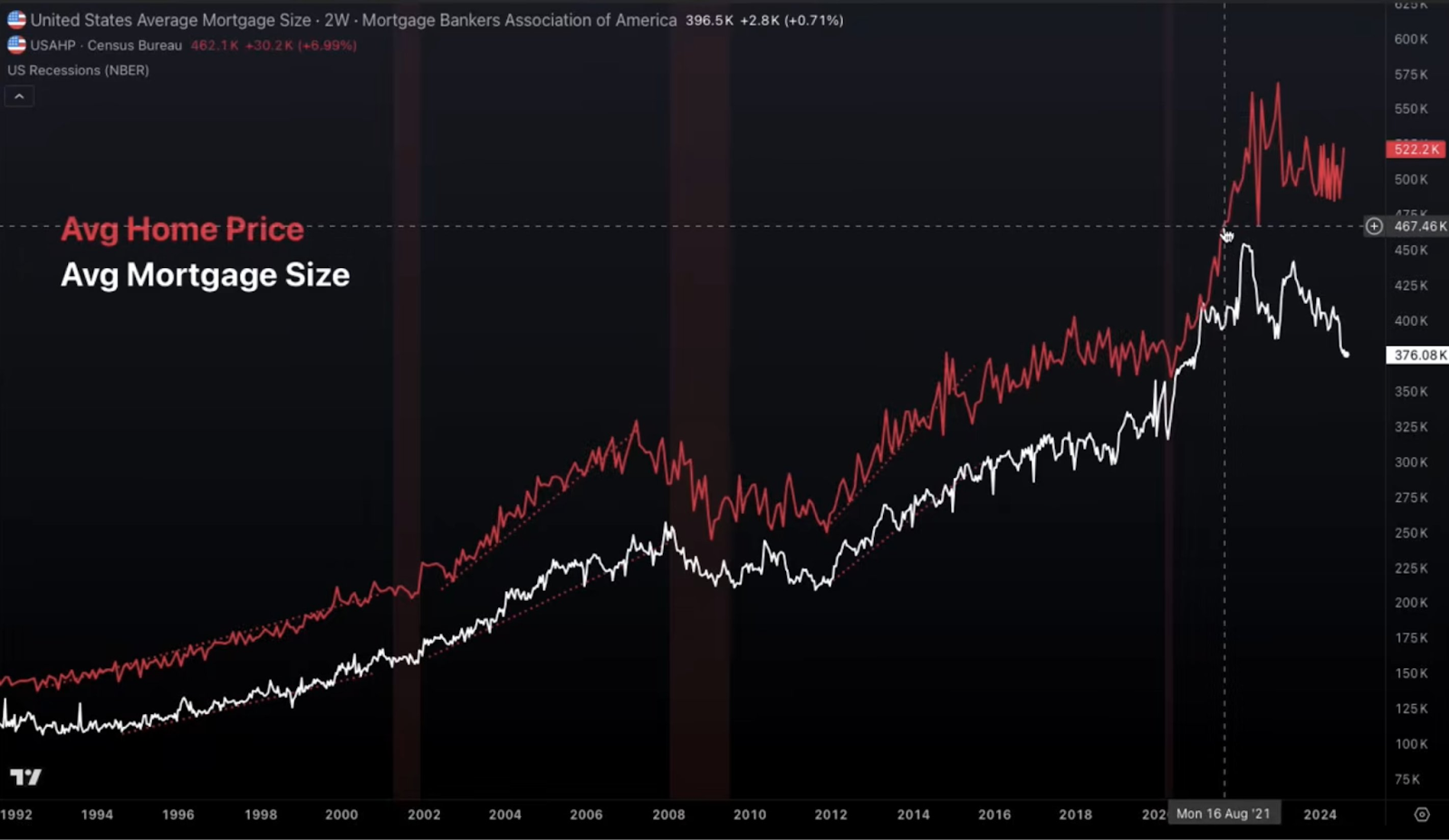
Meanwhile, a disconnect was growing between home prices and average mortgage sizes as you can see from the chart below. This is generally a bullish indicator as less debt and more cash is being used to purchase homes, a trend usually seen during periods of robust growth. However, the truth is far darker, as pointed out by Infra on Twitter. This instance of an increasingly cash-driven market is due to institutions dominating housing demand, not working class individuals.
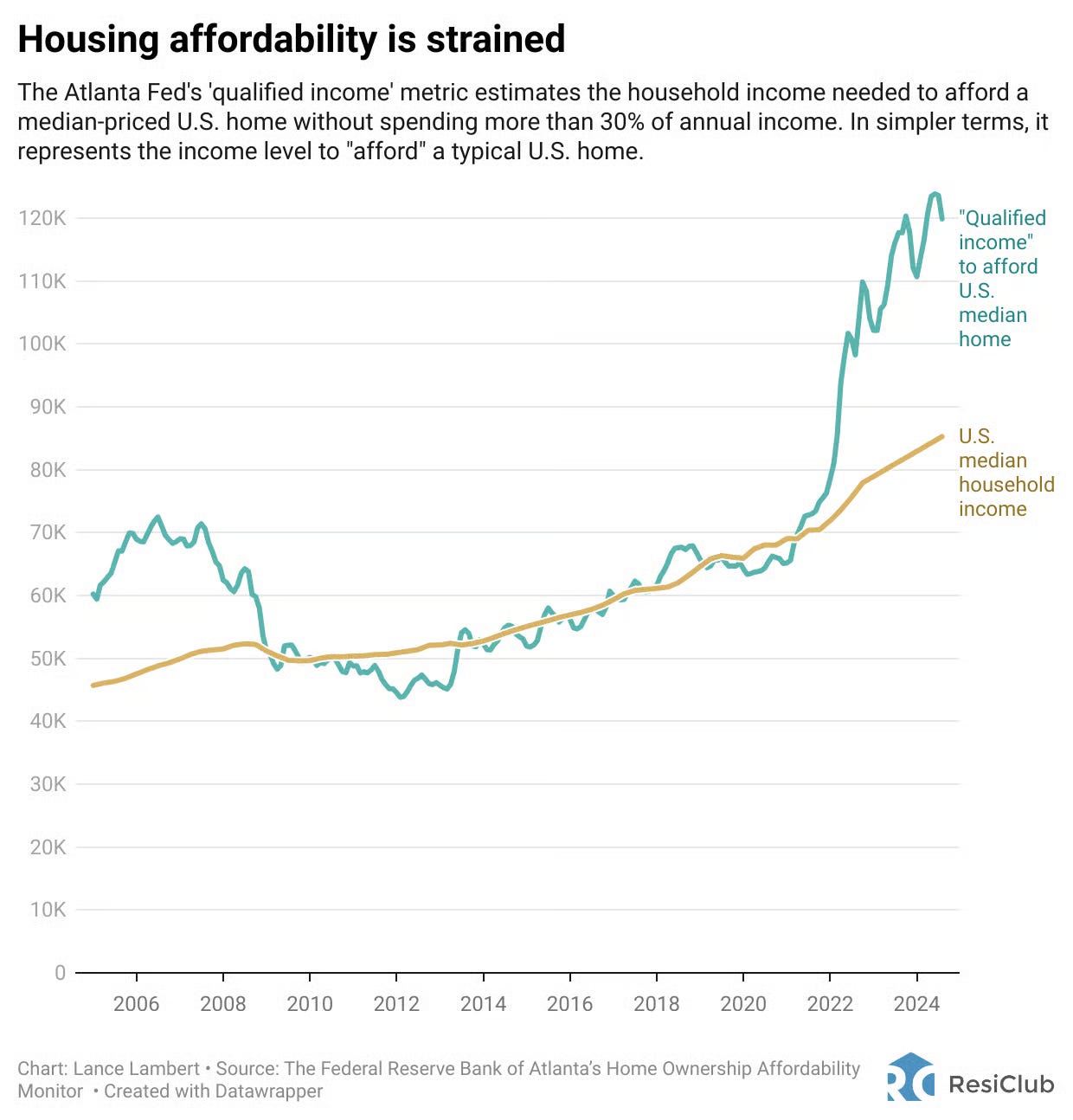
While prices continued to rise during the pandemic, real wages failed to keep up. The median income to afford a home is now north of $120K, well above the $73k seen during the housing bubble of 2007 and 2008.
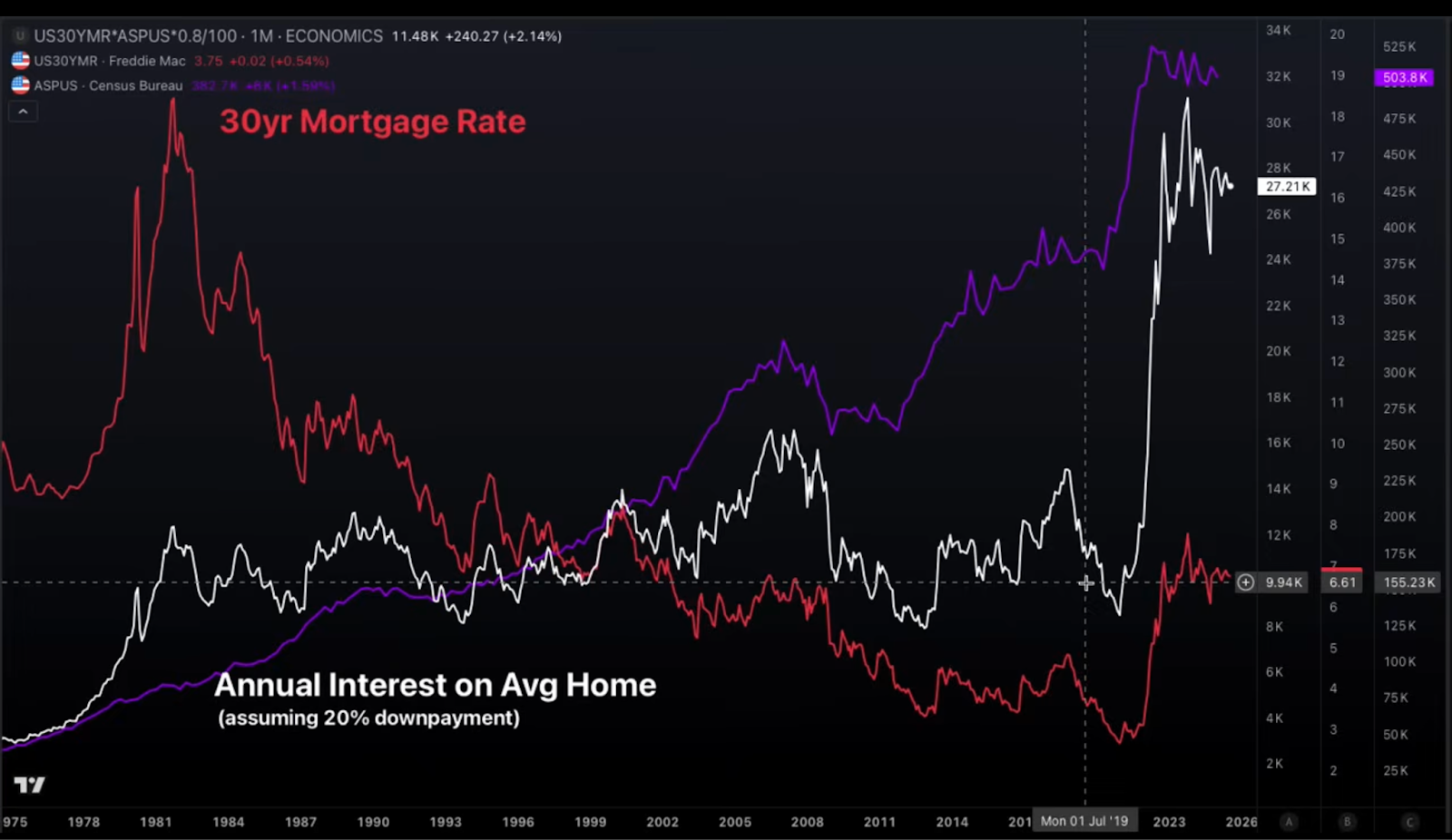
Part of this is due to the ratcheting effect of rates. Mortgage interest payments have tripled since the pandemic, locking out many would-be buyers. From March 2022 to March 2023, the Fed hiked from 0% all the way to 5%, the fastest cycle in history, more aggressive than anything seen since Volcker. Another aspect is the rising average home prices making mortgage loans larger. (This chart is also from Infra- highly recommend you follow him, he posts great macro analysis)
The median age of first-time homebuyers has now reached 35, the highest on record. For repeat buyers, it’s even higher at 58. Combine that with the post-COVID remote working shift that redirected housing demand to secondary and suburban markets, and you get a completely reshaped housing market.
And if those forces weren’t enough, Wall Street has entered the single-family market in force, often outbidding everyday Americans and fueling prices even further.
Since the 2010s, institutional investors like Blackstone, BlackRock, and Invitation Homes have rapidly expanded their presence in U.S. residential real estate, buying up both single-family homes and multifamily apartment buildings at scale.
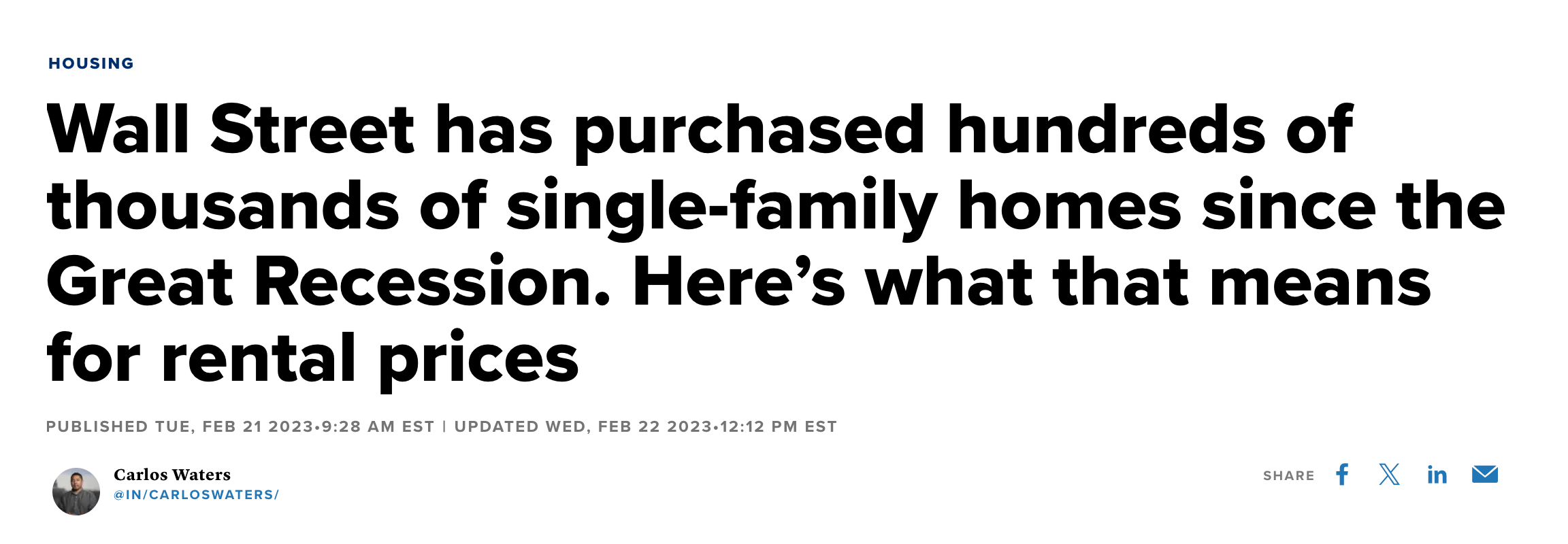
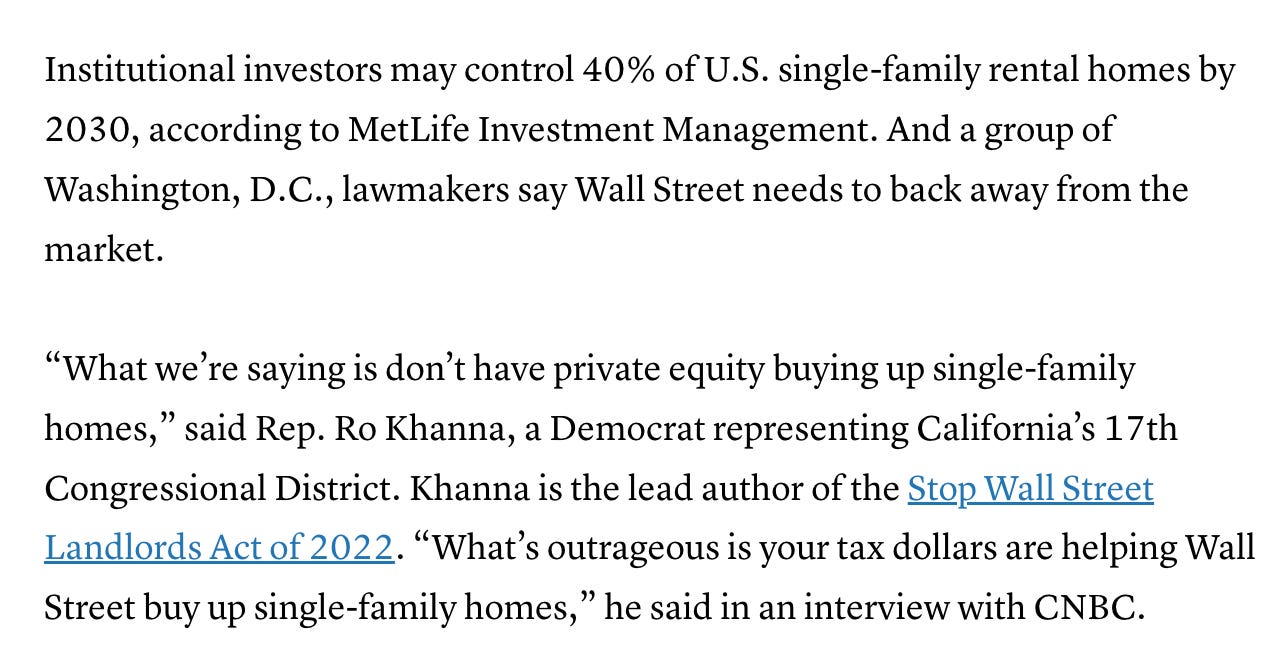
As of 2023, institutional investors owned over 700,000 single-family rental homes, with firms like Invitation Homes holding more than 80,000 properties on their own. In the multifamily space, Blackstone alone owns stakes in over 300,000 apartment units nationwide. This wave of corporate ownership has been concentrated in fast-growing metros like Atlanta, Phoenix, and Charlotte, where all-cash offers from funds have edged out individual buyers. They leverage cheap capital and economies of scale to aggressively acquire, rent, and securitize housing, often driving up home prices and rents in the process.
This explains the earlier chart that shows the disconnection between median home price and median mortgage size. The mortgage amount is decreasing because of the influx of cash only offers from the private equity giants, something that has never been seen before.
By 2030, some analysts estimate that institutional investors could own up to an incredible 40% of single-family rentals in certain markets.
Behind the scenes, Fannie Mae and Freddie Mac are quietly being positioned for a possible return to public markets. If that happens, we’ll have to see where that capital flows, and how it affects housing policy. Bill Pulte, a housing developer and Director of the Federal Housing Finance Agency has been vocal about this idea to take Fannie and Freddie public.

These two government backed enterprises are responsible for an incredible 70% of mortgage securitization, and are a major factor why the U.S. is one of the few developed countries with 30 year mortgages as a national standard. They are both GSEs, Government Sponsored Entities, which means that they have an implicit government backstop. If they fail, the government will step in and organize a bailout, using funds from the Treasury or from the Federal Reserve.
But now the cracks in the housing market are showing.
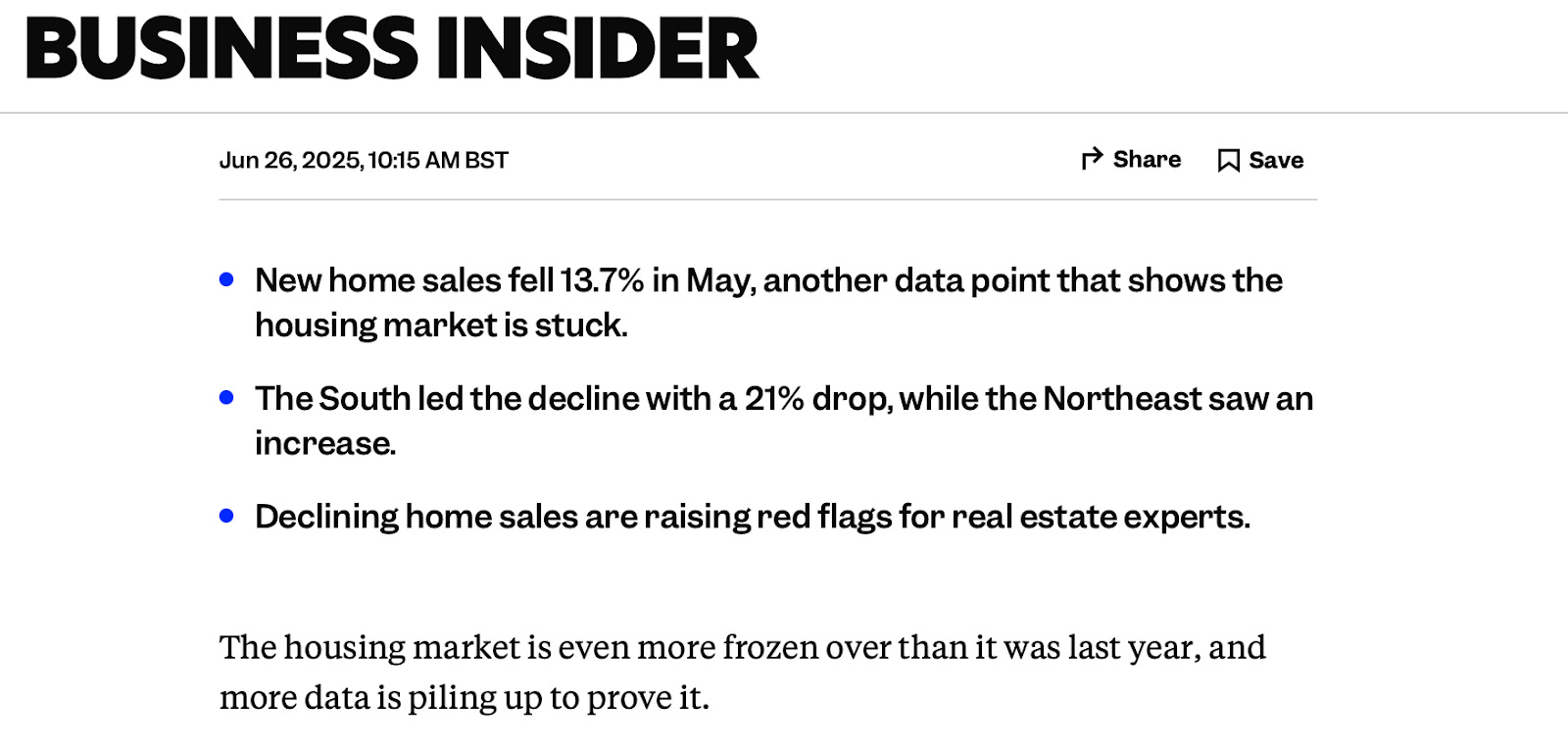
In the resale market, supply is growing 25 percentage points faster than demand. Case-Shiller has posted two straight months of price declines. Median home prices have been trending downward since 2022. New home sales just dropped 13.7% MoM, reaching their lowest levels in seven months, and are down 6% YoY.
The national median “days on market” has risen 35% year-over-year to 54 days. Builders, feeling the pressure, are offering incentives like mortgage rate buydowns and full closing cost coverage just to move inventory.
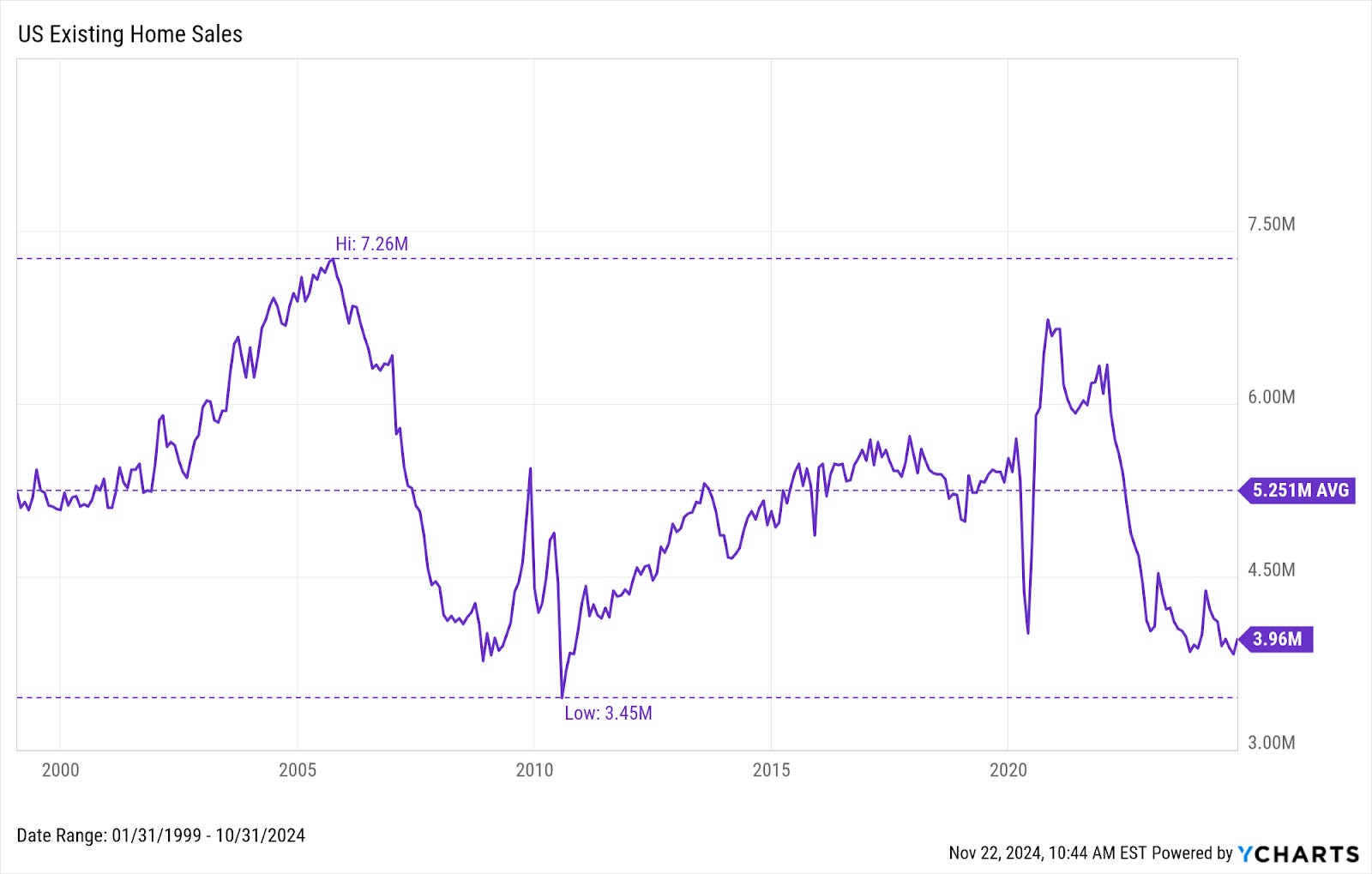
Meanwhile, existing home sales remain near post-2008 crisis lows, with closings falling and pending sales in decline. If we use a market maker metaphor, the amount of trades on both sides of the bid ask spread are declining. Buyers and sellers are pulling back, and spreads are widening. We are watching overall liquidity in the housing market dry up.
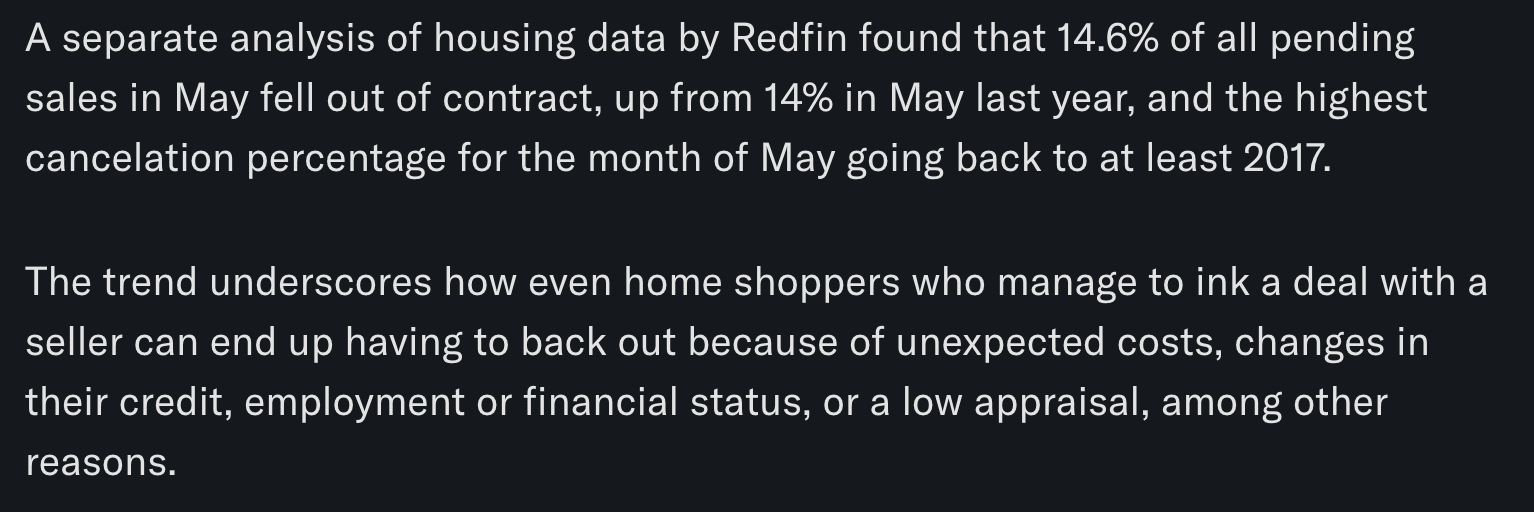
The blend of high rates and growing economic uncertainty are making both buyers and sellers nervous. Deal cancellations are surging, with some reports putting May’s cancellation rate at 14.6%. Sellers are now being forced to negotiate or risk losing deals entirely. Permits remain well below 2006 levels, another sign that builders see trouble on the horizon.
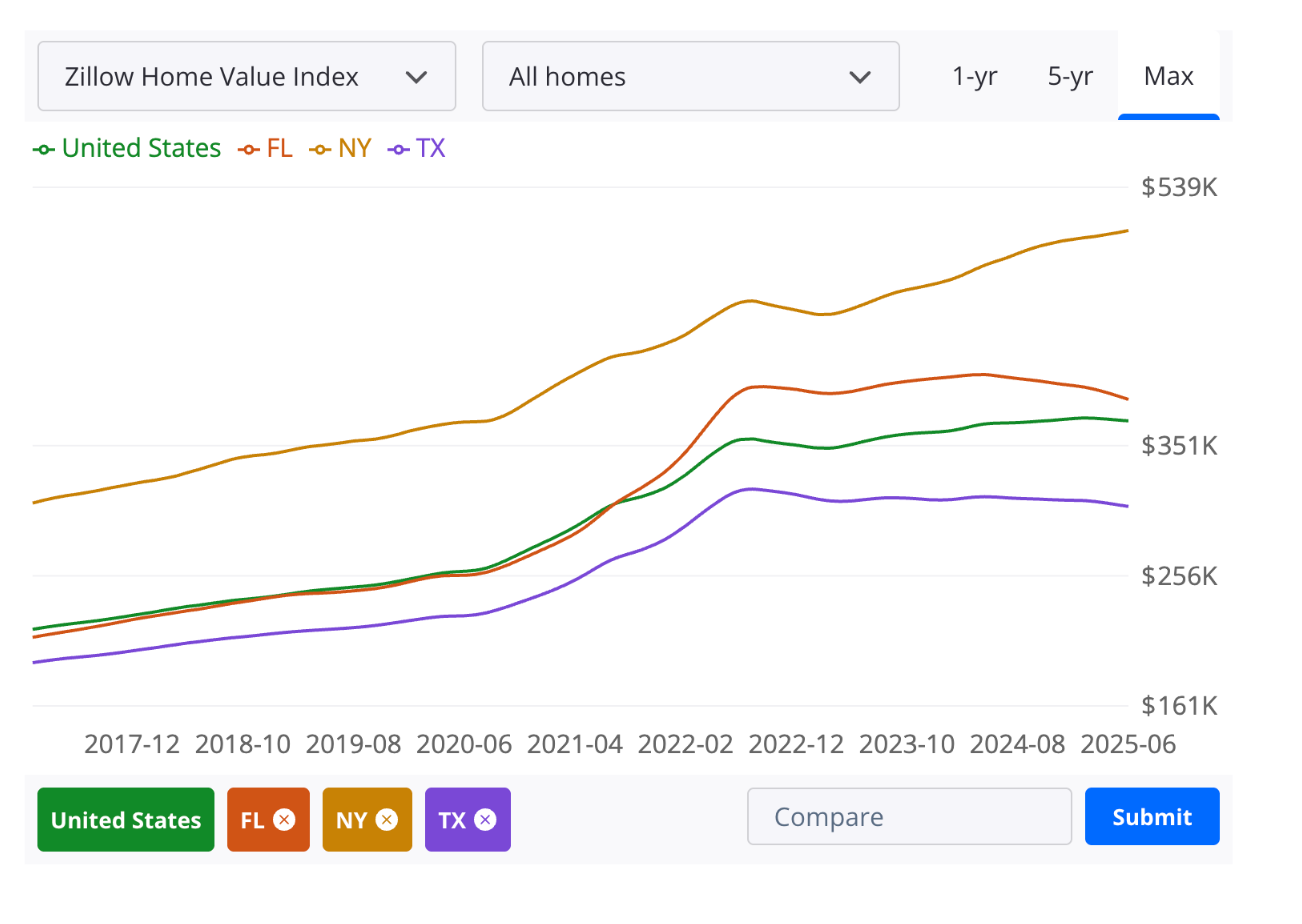
In states like Florida and Texas, home prices are falling. In New York and the broader Northeast, prices are still rising.
I used Zillow Home Index to make comparisons between several different states; you can see the divergence clearly here. New York home prices continue to climb while FL and TX are rolling over. Much of this is due to the whiplash from COVID-19; in the wake of the pandemic and the subsequent lockdowns many remote workers moved to lower cost states in order to take advantage of the relatively more affordable homes. Now, with restrictions over, and home prices drastically up from the starting point, the demand is rapidly falling while supply is still steady, causing a moderate decrease in median home prices.
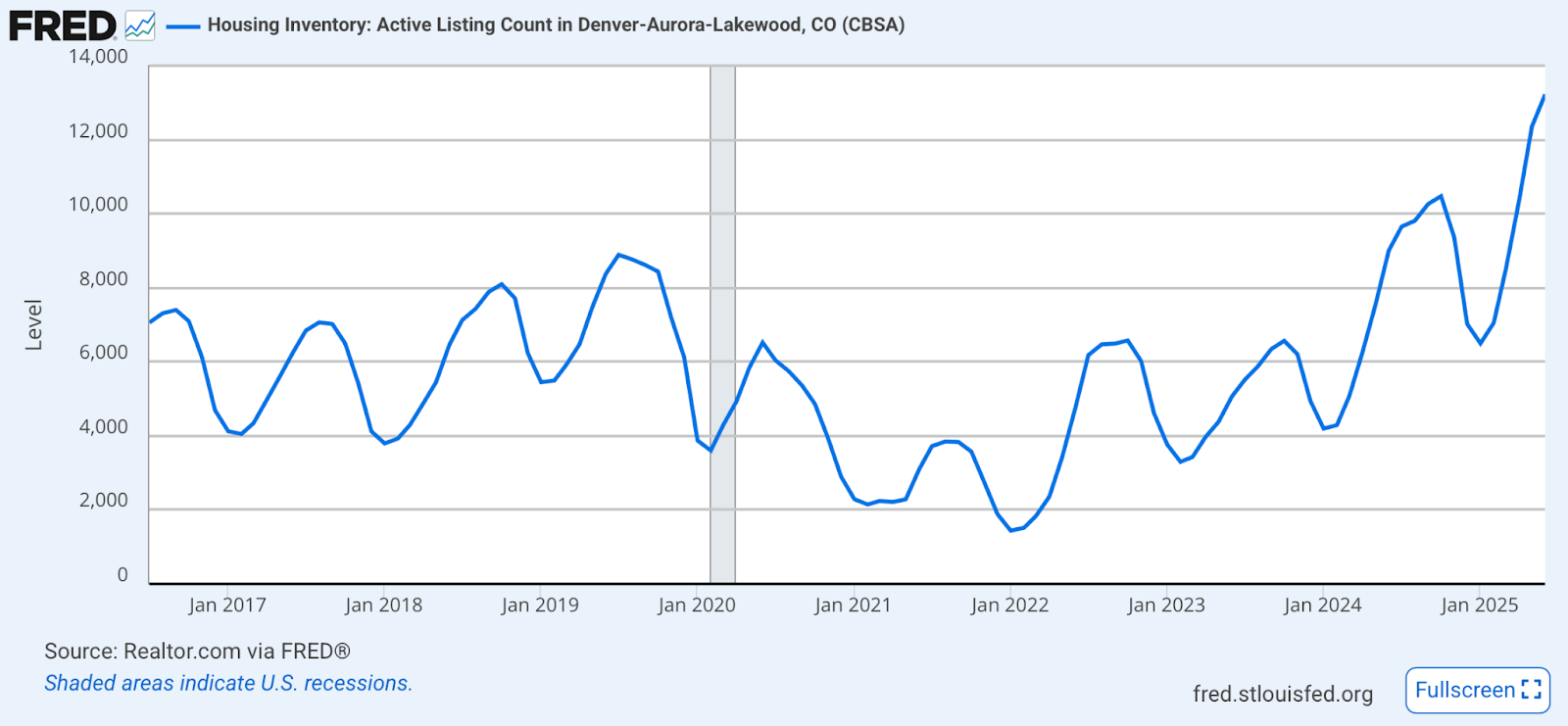
In Denver, one of the fastest-rising markets of the pandemic boom, the reversal has been swift and brutal. Inventory has exploded up nearly 800% from its 2022 low, preventing any chance of further price growth. With far mo
re sellers than buyers, the laws of supply and demand are kicking in and prices are falling. Median home values are down almost 8% from their peak, and sellers are cutting at the fastest pace since 2012. Properties that once drew bidding wars now sit idle for weeks. Denver’s surge was driven by tech jobs and remote workers fleeing pricier cities, but as tech layoffs mount and affordability collapses under the weight of 7% mortgage rates, demand has vanished. Denver has become a textbook example of what happens when speculative euphoria collides with economic gravity.
This is the tale of two Americas: a Southern and Midwestern correction unfolding against the backdrop of continued strength in urban Northeastern markets.
Most homeowners are still locked into the ultra-low mortgage rates they secured in 2020 and 2021, and they’re in no rush to sell. That “rate lock” effect is keeping supply artificially low even as demand crumbles. Meanwhile, mortgage rates hovering around 7% continue to crush affordability.
This is not a repeat of 2008. There’s no wave of mass foreclosures, no toxic CDOs ready to detonate. But it’s still a correction, a slow-motion collapse, stretched out over months and possibly years, with tension in the market continuing to build as buyers and sellers remain at a standoff.
And that tension is now boiling over into the political arena. On June 18th, 2025, Bill Pulte took to X to join Trump in publicly calling for Fed Chair Jay Powell’s resignation, accusing him of being too late to cut rates and blaming him for deepening the housing slump.
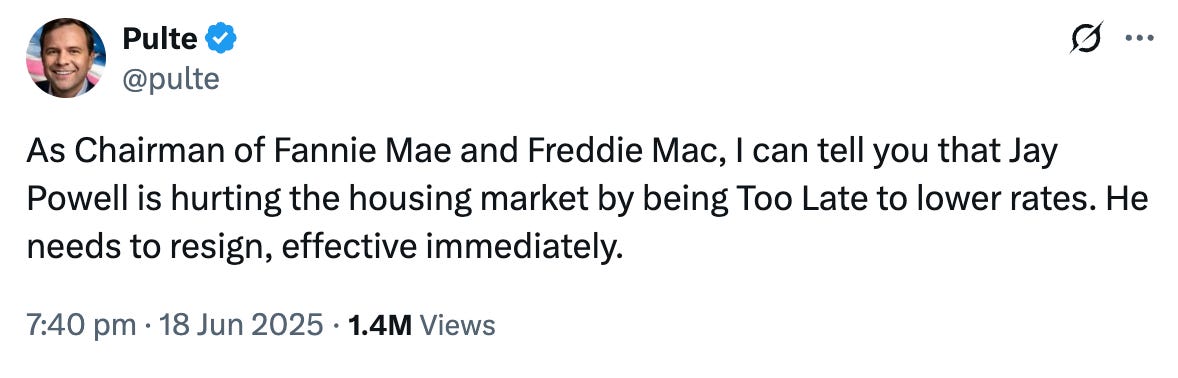
When the head of the nation’s top housing finance institutions publicly demands the Fed Chair step down, you know the stakes have shifted. The housing market, like the stock market, is now at the mercy of the Fed. If they pivot back to rate cuts or resume QE, housing could roar back pushing prices even higher and deepening the affordability crisis for millions of Americans.
Either way, one thing is clear: the post-COVID housing boom is over. What comes next depends on credit, policy, and whether Powell opens the floodgates.
“Fannie Mae” & “Freddie Mac,” reputation-wise, might do themselves a public relations favor and rename themselves “Gonorrhea” & “Herpes”.
Covid was madness in many respects, one of them fiscal policy in US and EU. Now we all pay the price.