
Silver Squeezes
Lease rates for silver are exploding. Is a reckoning in store for the bullion banks?


The London silver market has erupted into chaos.
Silver has hit the highest in decades as a historic short squeeze in London intensifies, with prices surging above $53 an ounce, marking the second time in history silver has breached the $50 threshold: the first being the Hunt Brothers’ infamous corner in 1980.
But this time is different. This isn’t a handful of Texas oil billionaires trying to corner a market; this is the entire global financial system buckling under the weight of its own paper promises.
This week, Silver lease rates surged to more than 30% on a one-month basis, creating eye-watering costs for those looking to roll over short positions. Let that sink in: banks are paying annualized rates of 30% just to borrow silver for a month. One market insider told Mike Maloney:
“Nobody’s got silver. Lease rates are 20 to 30 percent if you’re lucky enough to find a lender”.
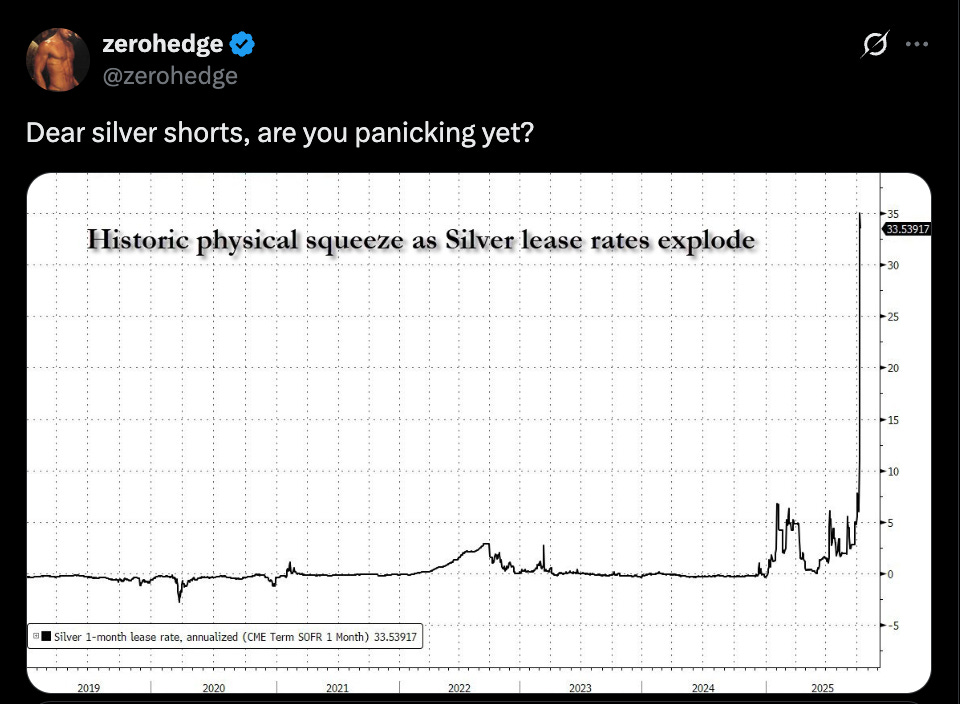
Perhaps more telling: this is the fifth time this year silver borrowing costs are above 5%, representing a 500% surge from the historical near-zero levels.
As Bloomberg notes (via YH Finance):
The silver auction in London – a daily price-setting event held since 1897 – on Friday traded above $50 for the first time ever. Spot prices in London shot to a premium as high as $3 over futures in New York, a level previously only seen in the midst of the Hunt brothers squeeze. The cost to borrow London silver overnight rose well over 100% on an annualized basis, which at least one market veteran said he believed was higher than anything seen during the 1980 squeeze.
This is what a market breaking point looks like.
What makes this moment particularly fascinating, and particularly dangerous for those on the wrong side of the trade, is that we’re watching the simultaneous failure of multiple systems that have worked in concert for decades to suppress the true price of silver. This ranges from the London Bullion Market Association’s fractional reserve silver scheme to the COMEX’s paper derivatives circus to the industrial users’ just-in-time inventory management philosophy that assumed silver would always be available at reasonable prices whenever they needed it.
