
The Impossible Trinity
Kevin Warsh walked into the most powerful job in global finance promising three things at once. He can’t have all three.

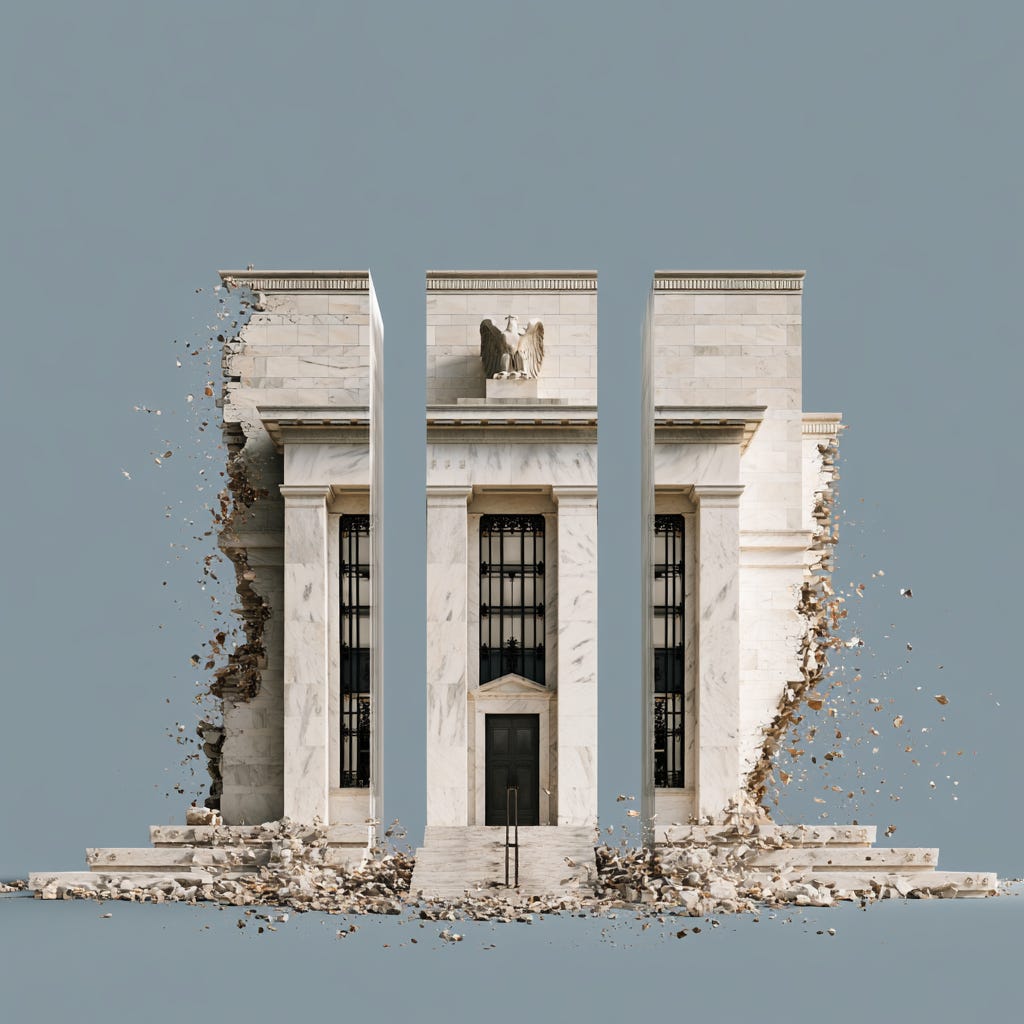
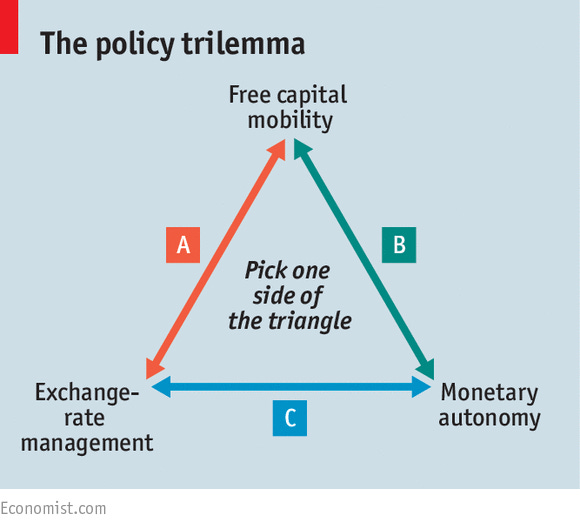
There’s a concept in international economics called the Impossible Trinity. You can’t simultaneously maintain a fixed exchange rate, free capital flows, and an independent monetary policy. Pick two, but the third one breaks.
Japan has been discovering this the hard way for years, as readers of this Substack know well.
Warsh was sworn in on May 22nd at the White House: the first Fed chair to receive his oath from the executive branch in nearly four decades. The optics were presumably someone’s idea of a fresh start. What they actually signaled was that the institutional independence the Fed has cultivated since Volcker is now decorative.
The new chair arrived not as an independent technocrat but as a political selection, expected to deliver rate cuts for a president who bludgeoned his predecessor publicly for years.
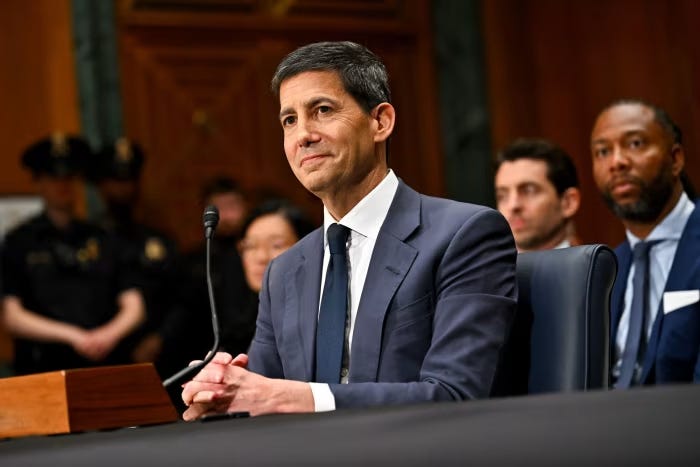
That is the backdrop against which Warsh is now attempting to run monetary policy with 4.2% CPI, a committee tilting hawkish against him, a $39 trillion national debt hemorrhaging $628 billion in interest payments in just seven months, and a predecessor who still has a vote at every FOMC meeting.
It’s an impossible task.
SPONSOR:
Bitcoin is freedom money, but only if you control your keys.
That’s why I am partnered with Bitcoin Well, the world’s first publicly traded non-custodial Bitcoin company, which ensures this freedom.
They send Bitcoin directly and instantly to your wallet.

Use the link https://app.bitcoinwell.com/signup?referral=peruvianbull to sign up and start stacking today!
Now let’s get back to it!
Let’s start with the first leg of the Trilemma.
Warsh called the Fed’s $7 trillion asset portfolio “bloated” in a Wall Street Journal op-ed written in November 2025 and has been consistent about it since before his nomination.
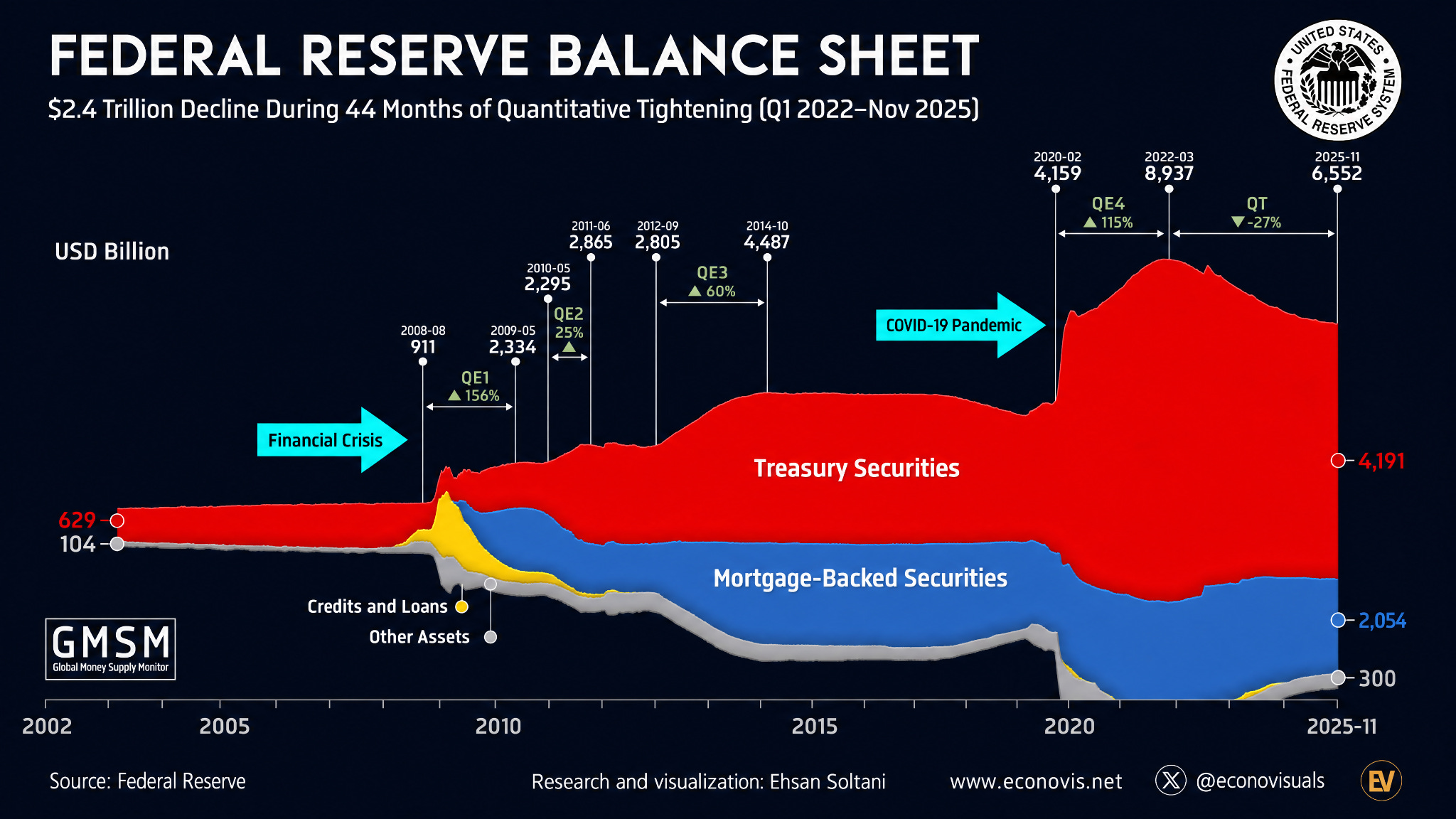
He’s not wrong descriptively: the balance sheet expanded from roughly $900 billion before 2008 to nearly $9 trillion at its pandemic peak, suppressing price discovery and creating an unhealthy dependency between financial markets and central bank intervention.
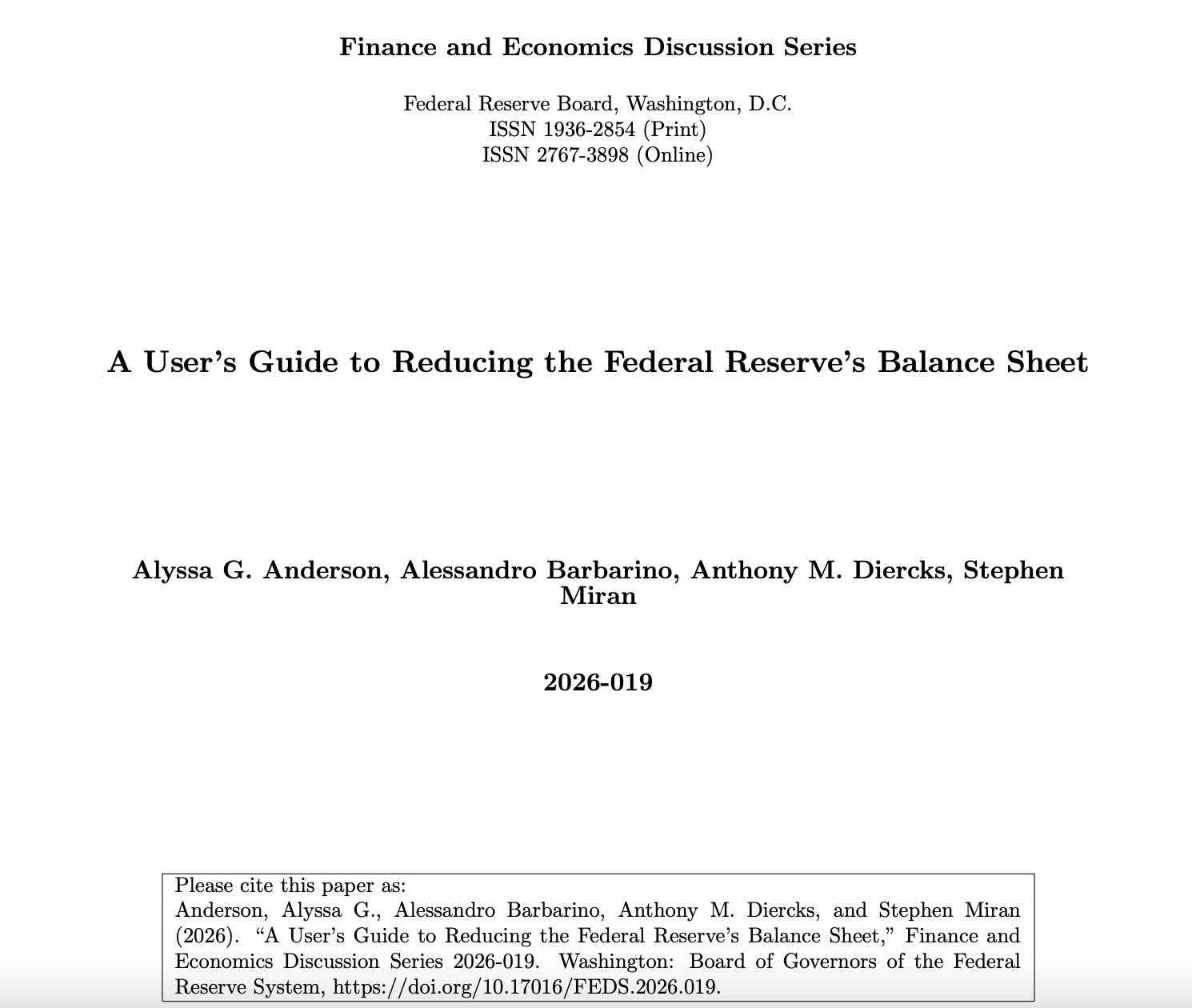
Warsh’s own Fed researchers published a paper this year acknowledging that balance sheet reduction of $1.2 to $2.1 trillion is theoretically achievable within the current ample-reserves framework, with further cuts requiring a formal transition to scarce reserves. The paper notes either pathway would take “at least a year and quite possibly several” before implementation could even begin.
That’s the optimistic internal view. Allianz Trade estimated in March that under a baseline scenario beginning in Q4 2026, bank reserves would drop from 9.5% of GDP to less than 7% by late 2028: uncomfortably close to the conditions of the September 2019 money market meltdown, when overnight repo rates spiked to 10% in a single day and forced emergency Fed intervention within 48 hours. Every participant at the Fed is haunted by this, as Anil Kashyap at Chicago Booth put it bluntly. “They feel that was an own-goal.”
For those of you who have read my work on Not-So-Stealthy QE, you’ll recall that the Standing Repo Facility was tapped for $50 billion in a single day in October 2025: an all-time record. The system was already showing dry spots before QT officially concluded in December.
Now consider what balance sheet reduction actually does to the Treasury market. With the Overnight Reverse Repo Facility drained to essentially zero after peaking at $2.6 trillion in December 2022, there is no buffer left.
Every dollar of QT now drains real reserves: the kind banks need to meet regulatory requirements and fund daily operations. Reduced reserves tighten funding conditions. Tighter funding conditions push repo rates higher, and higher repo rates push Treasury yields higher. It’s a feedback loop.
Higher Treasury yields on a $39 trillion debt load mean higher interest payments. The CBO projects interest costs rising from $1 trillion in 2026 to $2.1 trillion by 2036, and that assumes rates stay roughly where they are.
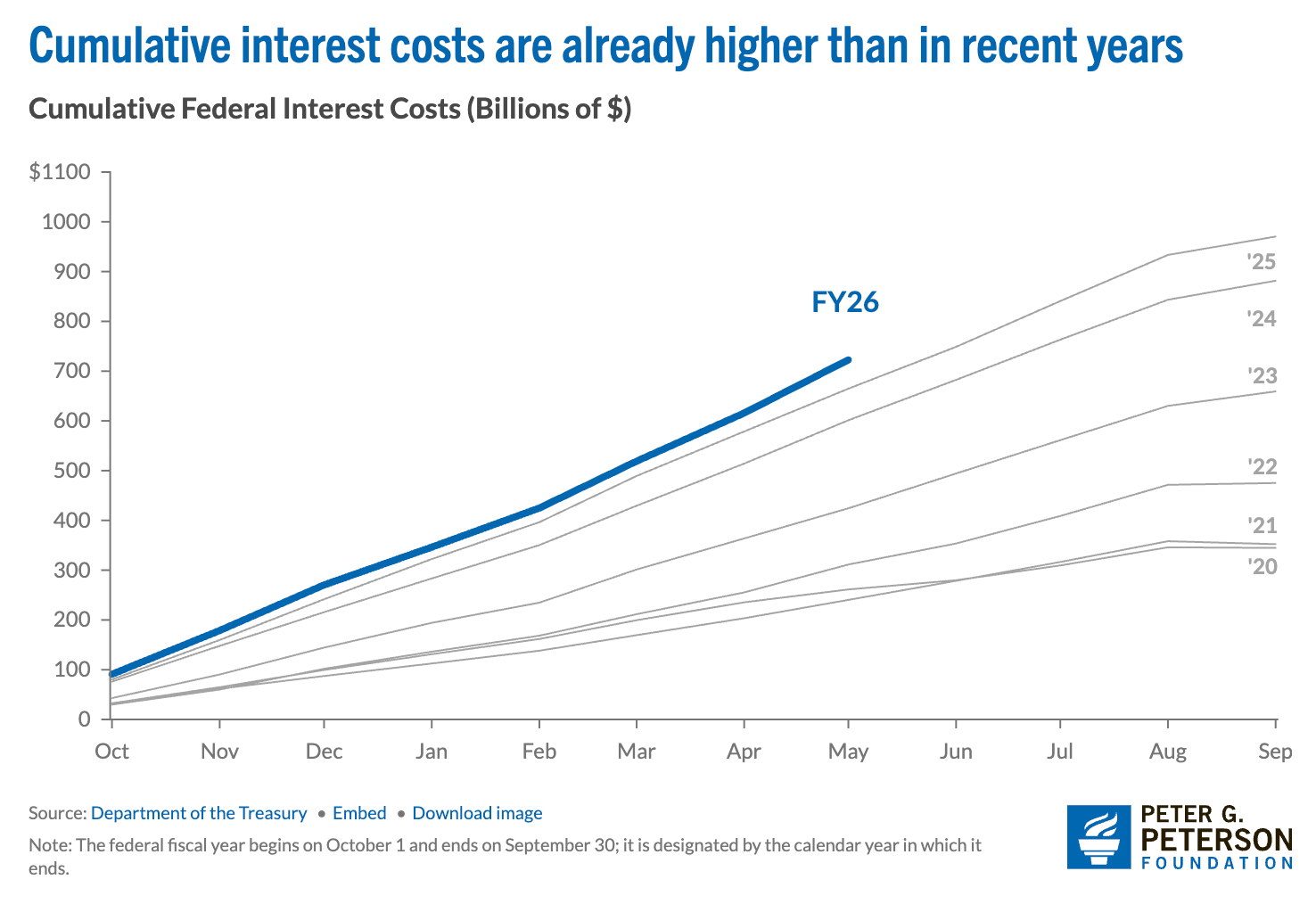
The Treasury is already spending $88 billion per month in interest, roughly equal to combined monthly defense and education outlays. If the yield curve backs up another 75-100 basis points on sustained QT, add several hundred billion annually to those projections.
The balance sheet reduction program that Warsh wants is precisely the mechanism that would make the fiscal situation preventing the balance sheet from shrinking worse. The system cannot escape this loop except through fiscal consolidation that is politically impossible.
The thing is, the balance sheet is not a dial. It’s a ratchet. It went up during 2008 and found a new floor at $4.5 trillion. It went up during 2020 and found a new floor somewhere north of $7 trillion. When the next crisis arrives, it will ratchet again. Warsh will discover this the same way every predecessor has.
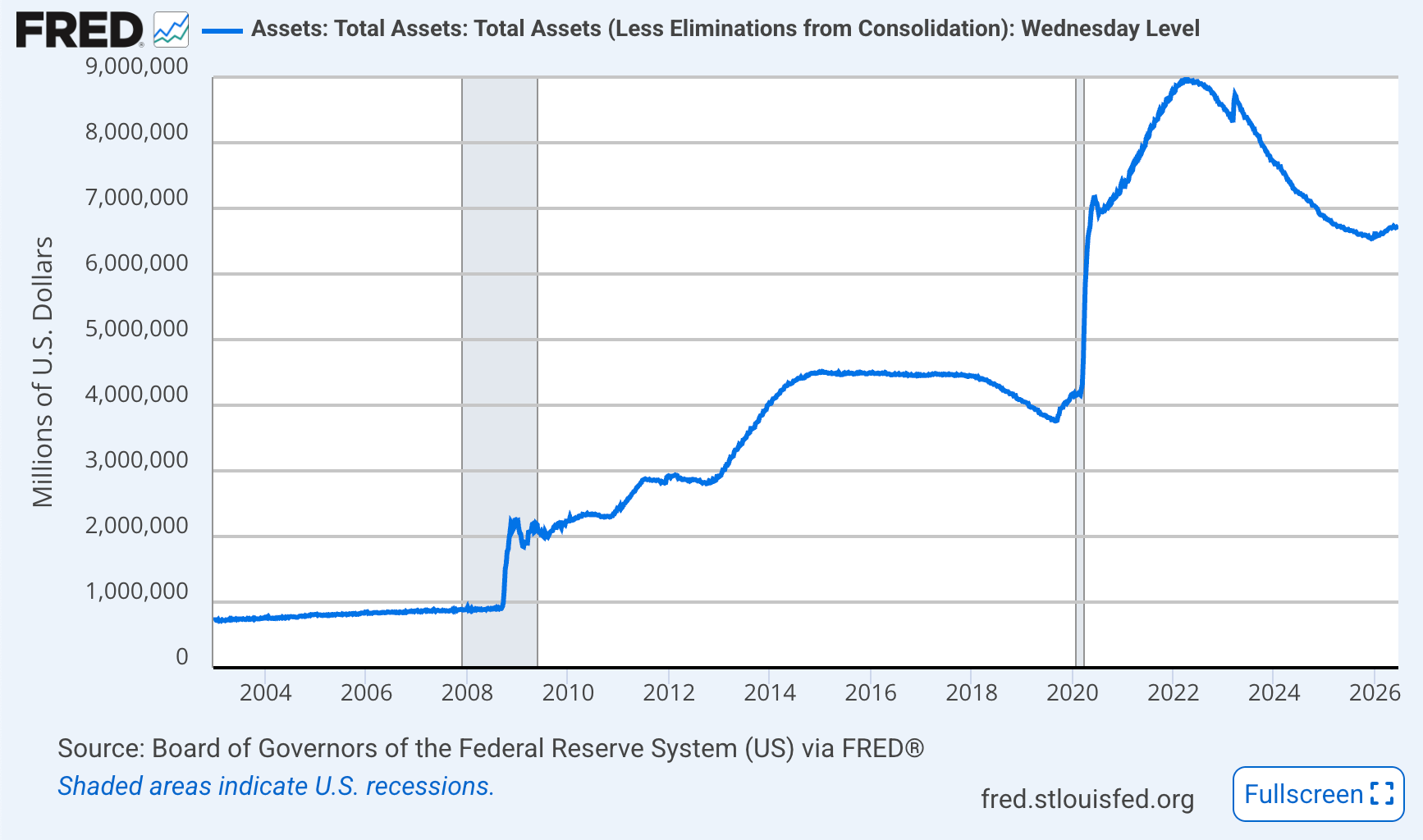
(Source: Federal Reserve / FRED)
Warsh arrived in Washington carrying the AI productivity thesis as intellectual cover for rate cuts. He called AI
“the most productivity-enhancing wave of our lifetimes”
and argued it would be a “significant disinflationary force,” citing Greenspan’s late-1990s decision to let the economy run hot on the back of internet-driven productivity. He drew the comparison explicitly and staked the framework of his tenure on it.
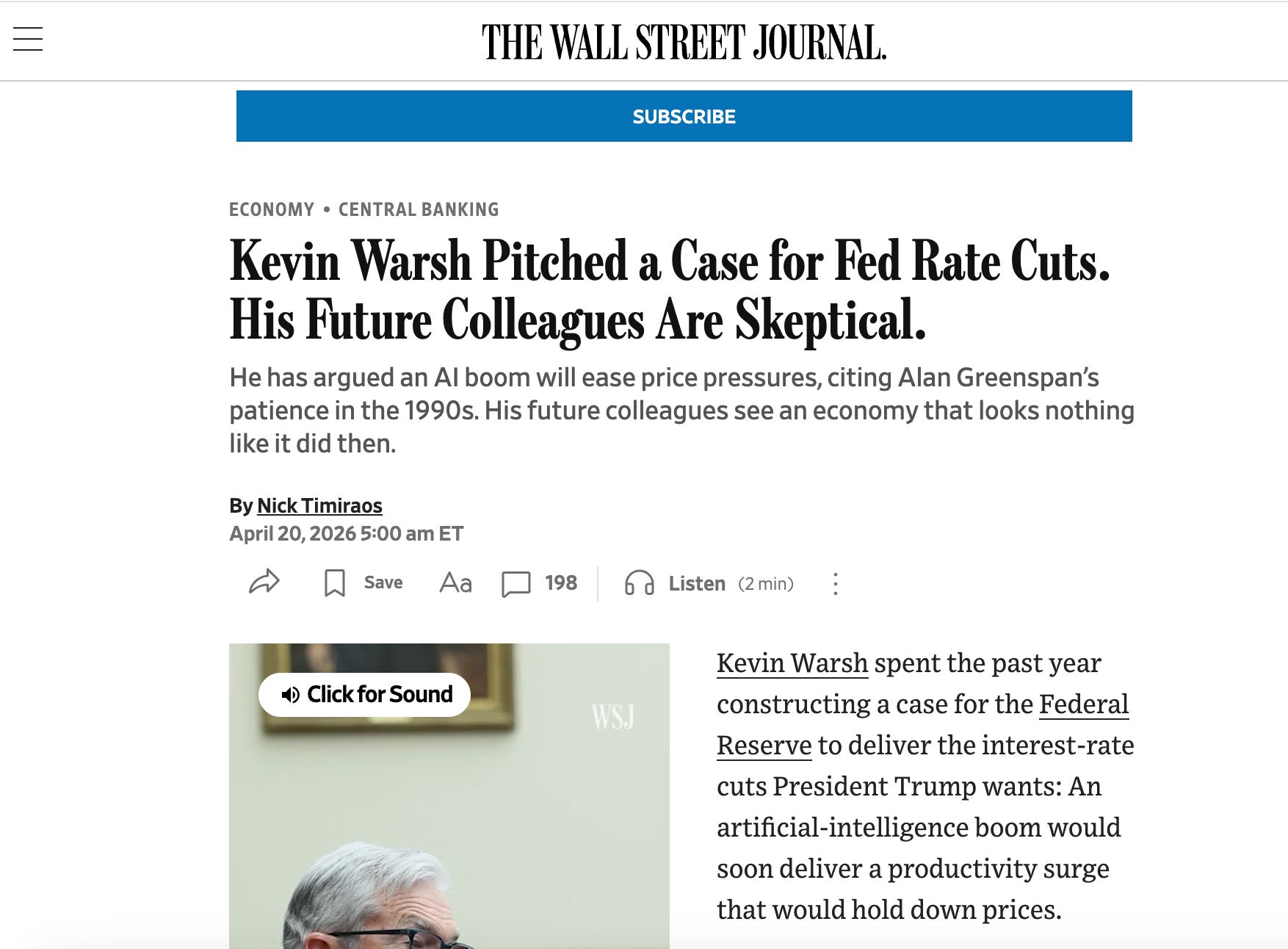
The analogy falls apart quickly. What actually drove the disinflation of the late 1990s was collapsing commodity prices: oil briefly hit $11 per barrel in 1998, along with cratering metals and agricultural prices.
The Fed got lucky and credited itself for an outcome the commodity cycle delivered. Greenspan also had a federal budget in surplus for the first time in decades, core inflation near 2%, and a manageable current account deficit. He had all of that and still presided over a bubble whose unwind caused a recession.
Warsh has none of it. The current AI buildout is a demand shock, not yet a supply shock. U.S. tech capital expenditure hit 4.9% of GDP in Q1 2026, eclipsing the dot-com peak of 2000. Data centers, power infrastructure, semiconductors: all absorbing labor, materials, and electricity at a pace that is bidding up costs across the manufacturing complex.
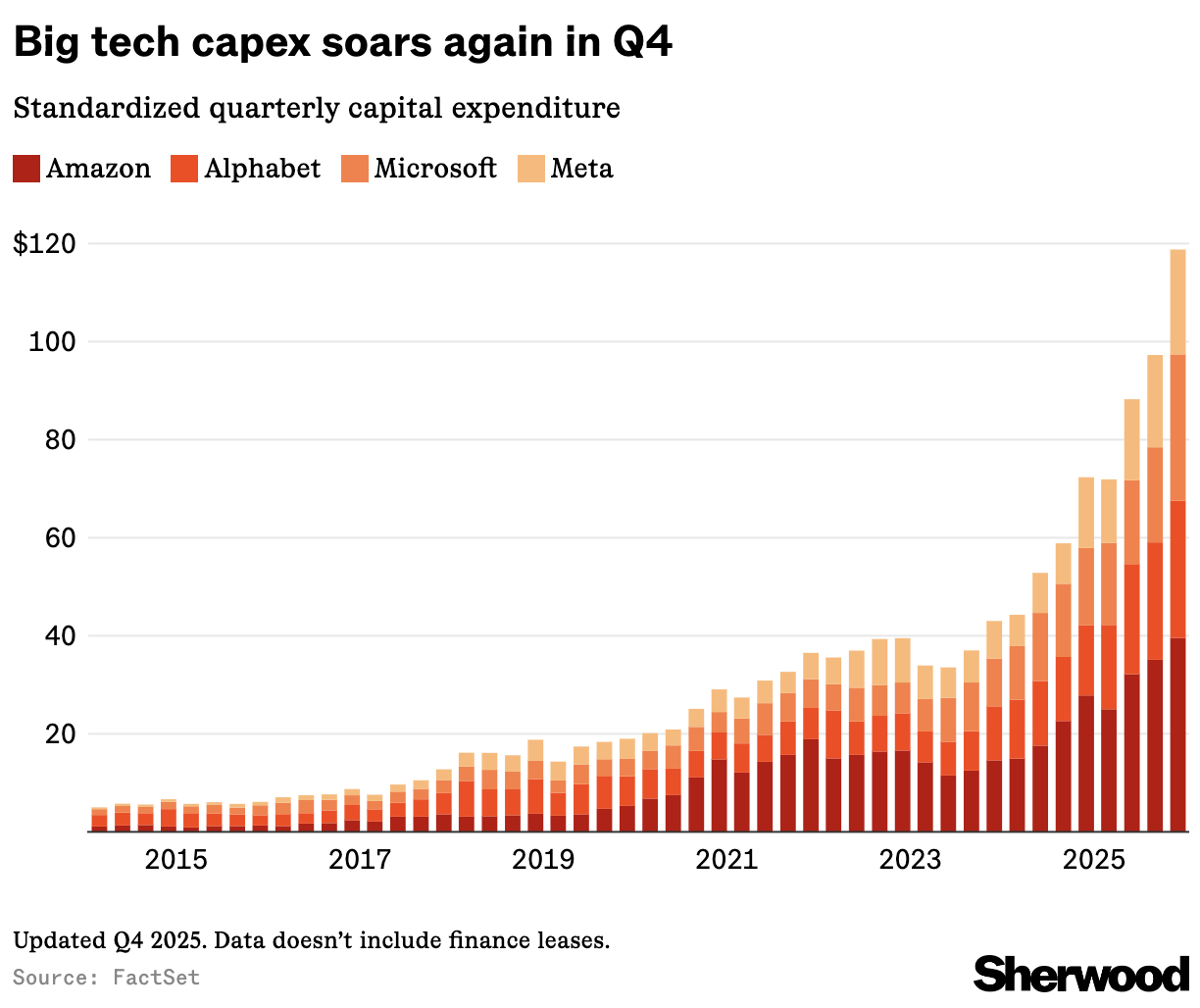
Apollo’s chief economist Torsten Slok put it plainly:
Economist Daron Acemoglu estimates total AI productivity gains at no more than 0.66% over a full decade, roughly 7 basis points per year. The supply-side benefits accrue later; the demand-side costs are here now.
Then the Iran war happened. When Brent Crude surged past $120 per barrel following the Strait of Hormuz closure on March 4th, the rate-cut argument didn’t just weaken, it evaporated. CPI hit 4.2% year over year in May, energy prices up 23.5% annually, real wages negative: workers earning 3.4% gains against 4.2% inflation.
Nine FOMC members penciled in at least one rate hike this year in June’s dot plot. Two-year Treasury yields jumped 13 basis points on the day of his first press conference, the biggest move on a Fed meeting day since 2008.
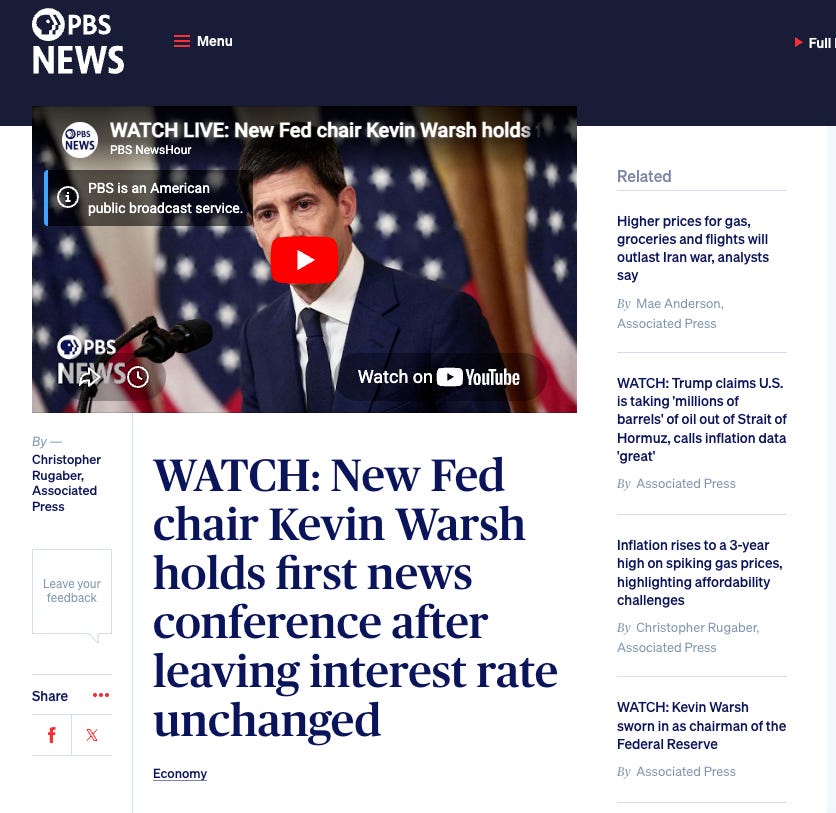
Warsh is right that forward guidance became a crutch.
When the Fed telegraphs its moves six months out, markets price it in, the signal disappears, and the Fed loses the informational content of market prices.
he said at his first press conference. He dropped forward guidance from the June statement entirely and refused to submit a dot for the dot plot. Markets have spent fifteen years building entire investment strategies around anticipating what the Fed will say next. The yen carry trade, the Treasury basis trade, leveraged credit: all of these are, at their core, short volatility bets that conditions remain stable enough to collect a spread.
Eliminating forward guidance doesn’t eliminate that dependency; it just removes the anchor. In the transition between the old regime where the Fed guided you and the new one where you’re supposed to figure it out from data, you get volatility spikes.
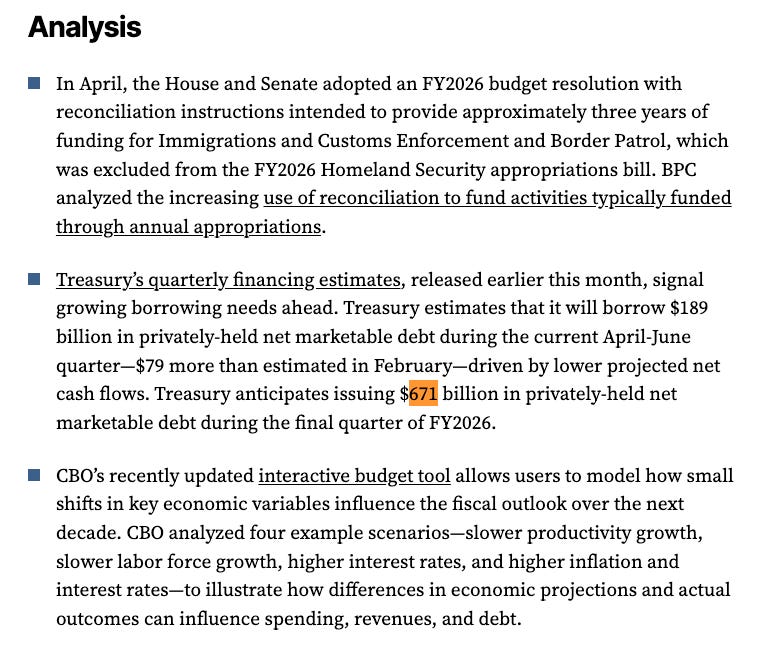
And the Treasury is rolling over $671 billion in debt in the final quarter of fiscal 2026 alone. A disorderly auction in that environment isn’t a market problem. It’s a fiscal crisis in embryo. March 2026 Treasury auctions were already flashing warnings: primary dealers absorbed 24% of a 2-year note, roughly twice their normal share.
Here is the paradox: eliminating forward guidance in a system this leveraged is likely to produce exactly the volatility episode that forces the Fed to restart its presence in markets through emergency repo operations or fresh asset purchases. Liquidity support is itself implicit forward guidance. It tells markets the Fed will be there when things break.
And here’s the funny part: Warsh is not running the committee he inherited. He’s running a committee that was already fracturing before he arrived, with a predecessor who still has a vote sitting two seats away from him at every meeting.
Powell confirmed on April 29th that he intends to remain on the Board of Governors “for a period of time to be determined.” His governor term runs until January 2028. This is the first time a Fed chair has stayed on the board after stepping down since 1948. His stated reason: the Trump administration’s legal attacks on the Fed have put its independence “at risk,” and he will not leave until the DOJ investigation into the Fed’s headquarters renovations is “well and truly over, with transparency and finality.”
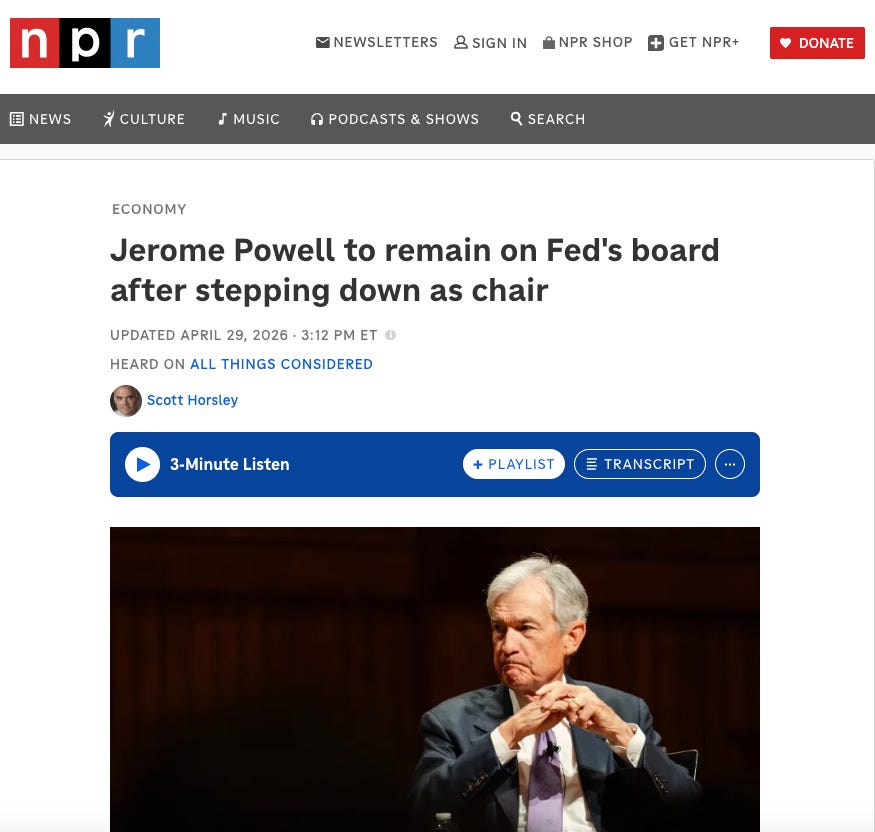
Some analysts tried to frame this as benign, pointing to Powell’s assurances that he plans to “keep a low profile.” Christopher Hodge, chief U.S. economist at Natixis CIB, was more direct: “Warsh is in the unfortunate position, through no fault of his own, to probably be the least influential Fed chair in a long time.” That’s not a fringe view. It’s the institutional reality.
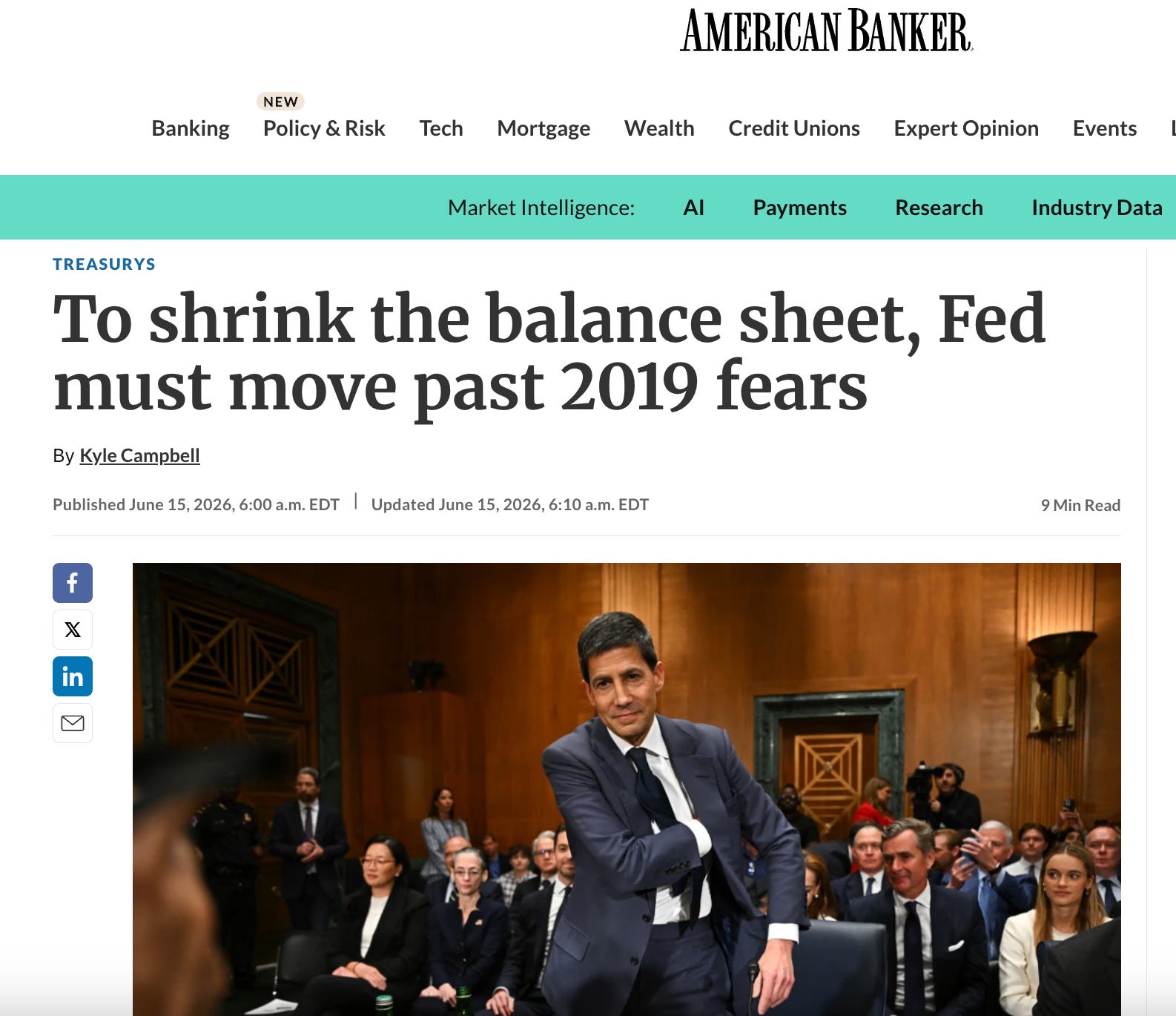
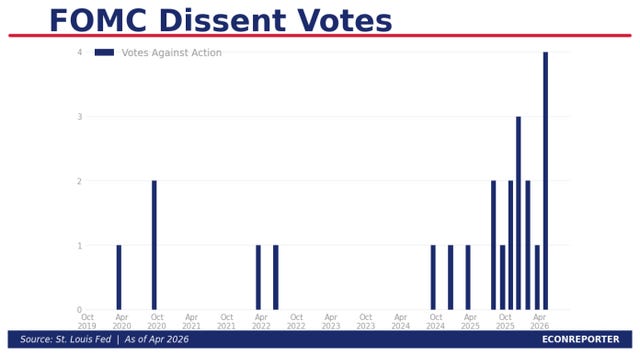
At Powell’s final April meeting, three regional Fed presidents, Hammack at Cleveland, Kashkari at Minneapolis, and Logan at Dallas, dissented not against the rate hold itself but against the easing bias in the statement. They didn’t want any signal that cuts were coming. Jeff Kilburg on CNBC called it plainly: “This is a new quarterback hitting the portal. This was the rest of the players letting him know, we’re not going to let you lead us here.” The April meeting produced the most FOMC dissents since October 1992. Warsh hadn’t even been sworn in yet.
Some observers have taken to calling it the “two Popes” problem: a sitting chair and a former chair both with votes on the same governing board, in an institution where signaling and credibility are everything. Powell insists he’s not a “high-profile dissident.” But consider the structural reality.
Every time the FOMC votes and Powell sides with Warsh, markets read it as Powell endorsing the new regime. Every time Powell dissents, markets read it as the old guard resisting. There is no neutral vote for a man with Powell’s institutional weight. His mere presence on the board refracts every decision through the lens of continuity versus change, and Warsh cannot control which interpretation wins on any given day.
The committee itself is not a blank canvas. Of the seven Board governors, three are Trump appointees. Warsh took the seat previously held by Stephen Miran, whose term ended in January. If any of the remaining non-Trump governors (Cook, Barr, Powell) were to resign, Trump could fill the seat and shift the board majority. That’s the pressure Powell is explicitly trying to prevent by staying. The irony is rich: the man Warsh replaced is now the structural obstacle to Warsh consolidating control of his own institution.
Warsh has floated one idea that will shake everything up.
He wants a new version of the 1951 Fed-Treasury Accord.
Some background for readers who haven’t read my pieces on fiscal dominance- the original 1951 Accord ended a decade of the Fed suppressing interest rates to finance government borrowing at below-market yields, a practice that had been in place since World War II.
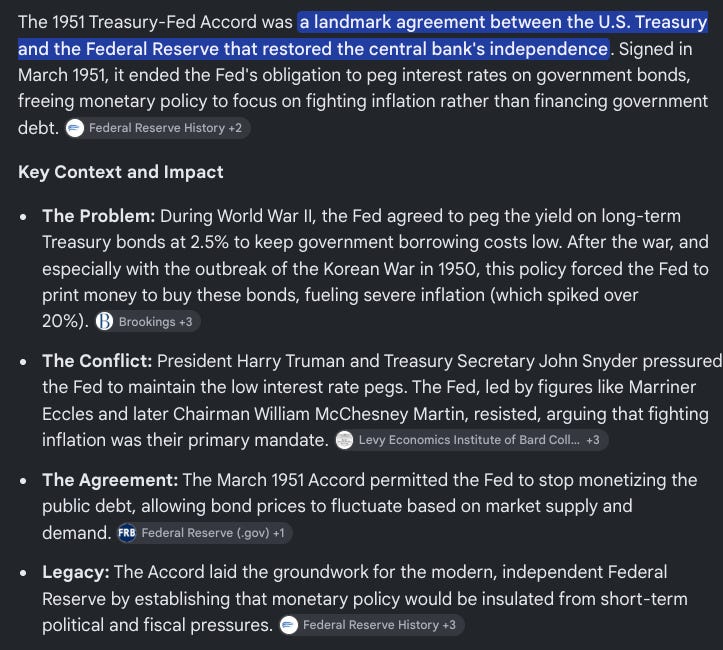
The accord formally separated Fed interest rate policy from Treasury financing needs, establishing the institutional independence that every Fed chair since has claimed as foundational. Warsh himself cited the accord in his confirmation hearings, arguing that the Fed’s post-2008 balance sheet expansion “violated the spirit” of that agreement by allowing the government to borrow cheaply on the back of Fed purchases.
Here’s the thing though. What Warsh is now actually proposing is a new accord that would coordinate the Fed’s balance sheet reduction with the Treasury’s debt issuance schedule, so that as the Fed sells long-dated Treasuries, the Treasury shifts its own issuance toward shorter maturities to absorb the impact. Deutsche Bank projects that under this framework, the Fed’s Treasury bill holdings could rise from under 5% of its portfolio today to 55% over five to seven years, with the Fed becoming a systematic buyer of short-dated government debt.
This is the marriage of Fed and Treasury- something I’ve long noted is a key marker on the road towards monetary decline. Every sovereign that has done this (or something like it) has seen vastly higher rates of inflation and economic malaise. The pretense of independence is being thrown out the window.
ABN AMRO’s economists called out what this actually means: “The Fed standing ready to buy any bills the Treasury issues smells a lot like deficit financing.”
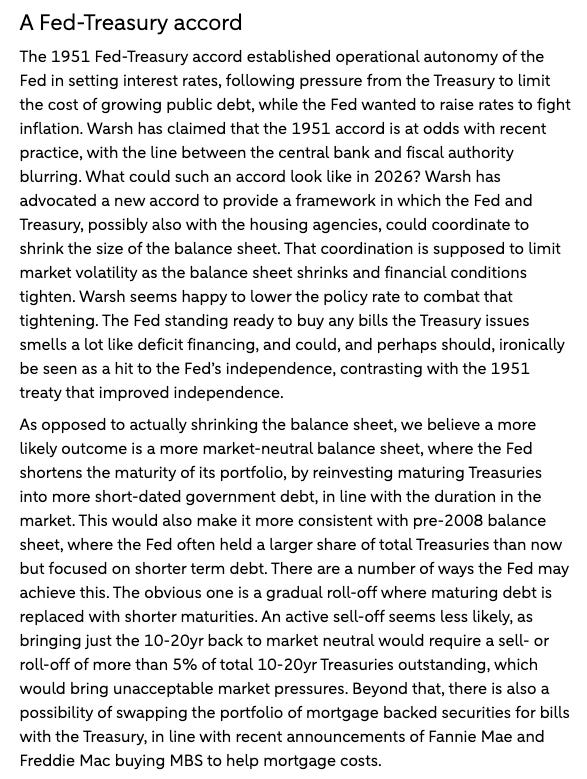
You can call it an accord, reserve management, or balance sheet normalization. But the moment the Fed commits, in writing, to absorbing a defined portion of Treasury bill issuance as part of a coordinated framework with the Treasury Department, it has institutionalized what it spent two years claiming it would never do: monetizing the deficit.
And the markets will see it. Ed Al-Hussainy at Columbia Threadneedle Investments put the risk precisely:
That’s not a rhetorical question. It’s the question that breaks the inflation-fighting credibility Warsh came in promising to restore.