

In October 2020, as the world grappled with lockdowns and economic uncertainty, the European Central Bank quietly began testing something far more consequential than any pandemic response: a digital euro. What started as a seemingly innocuous experiment in digital payments has revealed itself as the most dangerous consolidation of monetary power in modern history.
The euro, wielded by 350 million people across 20 nations and serving as the world's second-largest reserve currency, is poised to become the largest Central Bank Digital Currency (CBDC) experiment ever attempted.
This isn't simply about digitizing money, it's about placing absolute control over every financial transaction into the hands of 26 unelected bankers in Frankfurt.
The blueprint for this financial coup was laid out years before COVID provided the perfect crisis to accelerate implementation. In 2016, the Bank of England published a prescient paper titled "The Macroeconomics of Central Bank Issued Digital Currencies", becoming the first major central bank to model how a CBDC could fundamentally transform the global monetary system.
Buried within the technical jargon was a chilling admission:
"CBDC-funded asset purchases do not require any involvement from commercial banks" and that a "CBDC may potentially have greater efficacy than traditional QE."
Translation: central banks could bypass the existing banking system entirely, creating money and allocating it directly according to their political preferences. The delicate balance of power that has existed for centuries between private banks, governments, and central banks would be obliterated.
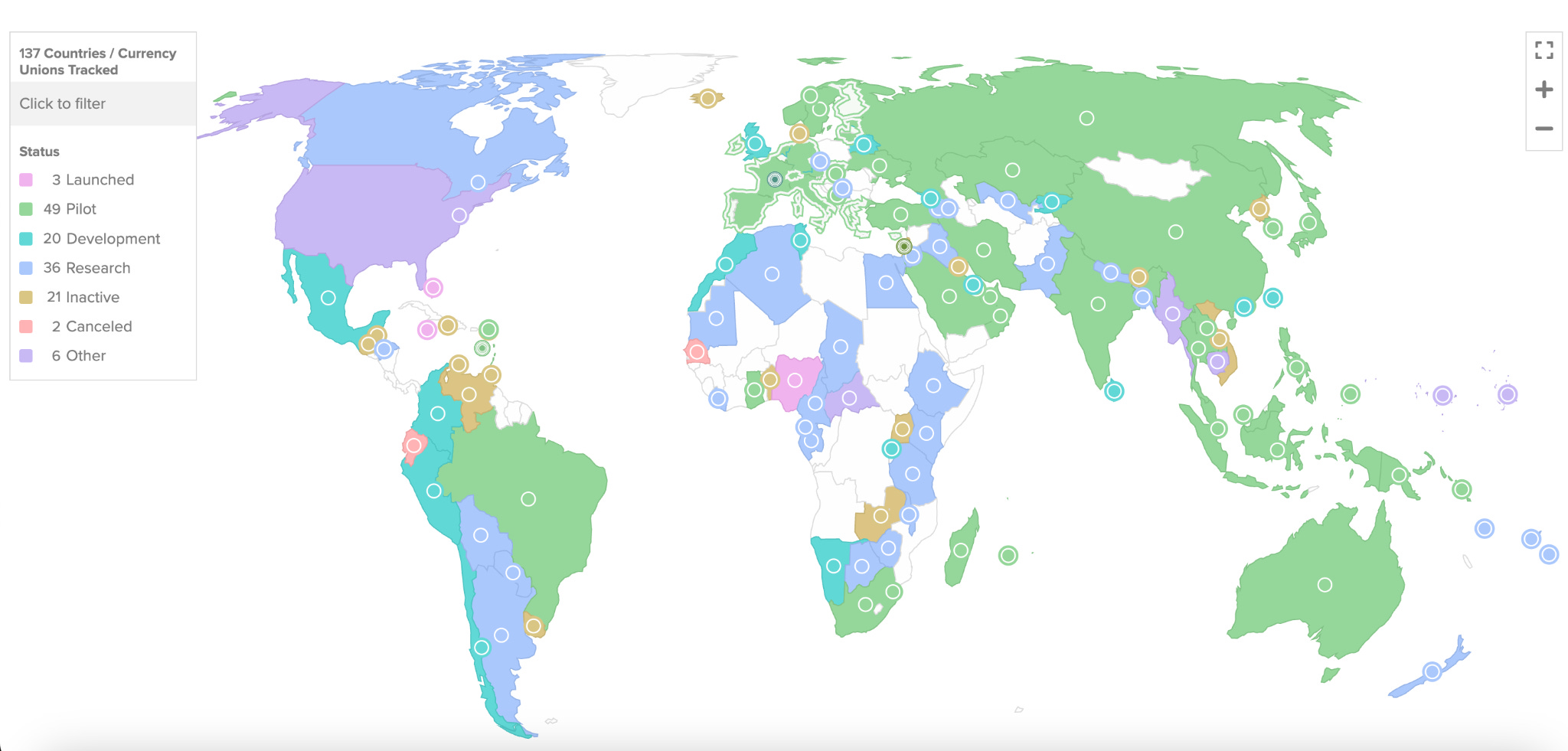
Since that seminal paper, the CBDC contagion has spread with terrifying speed. According to the Atlantic Council's CBDC Tracker, out of 195 countries worldwide, 134 are now exploring CBDCs, 68 have launched pilot programs, and 11 have already implemented them. What began as an academic exercise has become a global race to implement the infrastructure of financial totalitarianism.
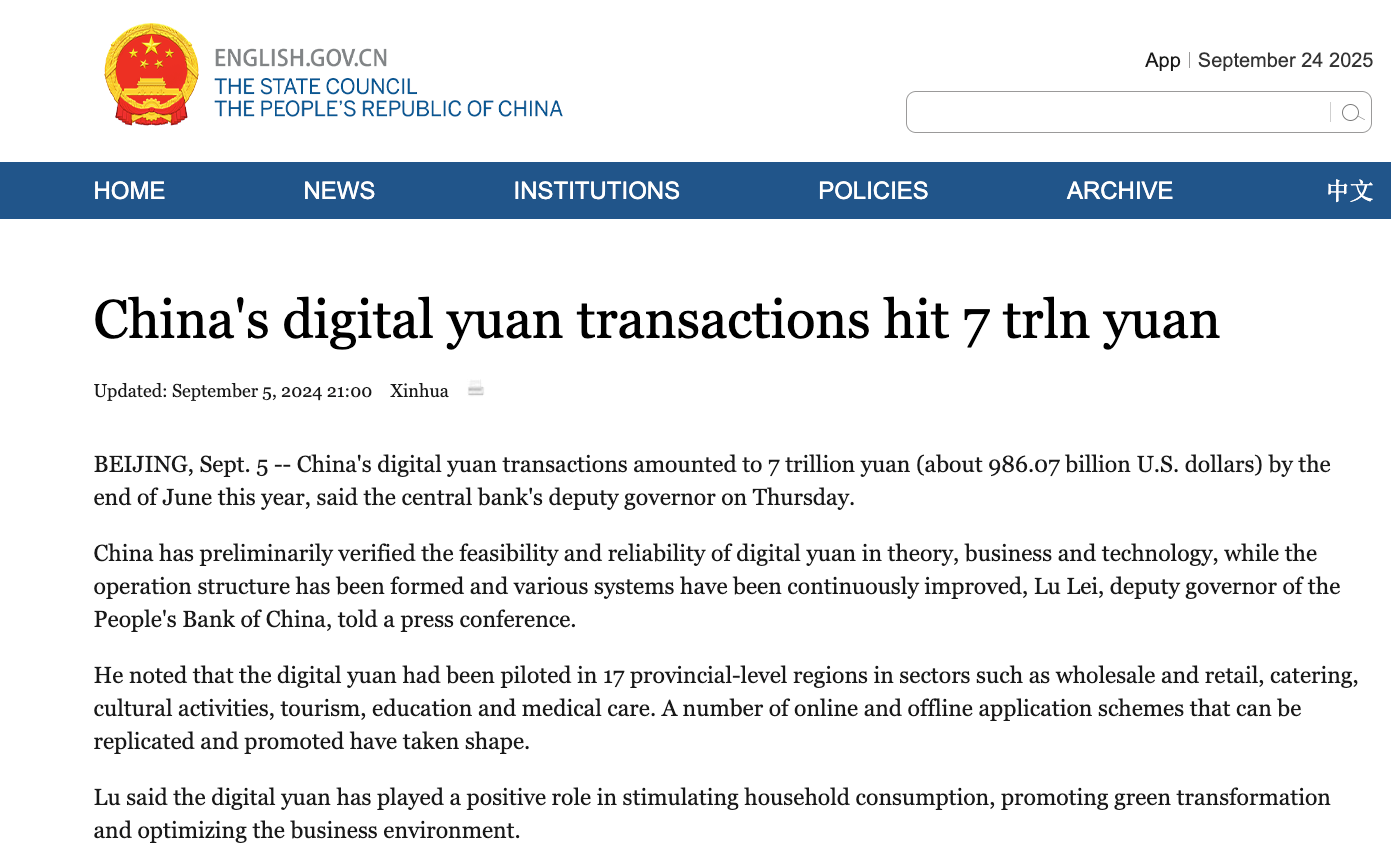
No country has moved faster or more aggressively than China in implementing their digital yuan (called the e-CNY). The numbers tell the story of a surveillance apparatus masquerading as monetary innovation. By 2024, the digital yuan had processed nearly $7 trillion in transactions, with over 260 million wallets opened across the country.
But these staggering figures mask a darker reality. The Chinese didn't achieve adoption through free market mechanisms, they engineered it through coercion. Municipal workers were paid in e-CNY, forcing adoption. State lotteries required citizens to download the app to claim prizes. Tax rebates, transport fares, and shopping incentives were all channeled through the digital currency system.
The People's Bank of China integrated the currency into WeChat Pay and Alipay, the apps that dominate China's massive digital payments ecosystem. Every transaction flows through a central ledger controlled by the state, complete with programmable features including expiry dates, spending limits, and even "green" restrictions tied to carbon usage.
Despite the massive transaction volumes, the actual balances held in e-CNY wallets remain minuscule: just 16.5 billion yuan compared to China's total money supply of over 287 trillion yuan. Consumers don't voluntarily choose surveillance money. Adoption only occurs when the state forces it.
China may be leading the way with its digital yuan, but it’s not alone. Across the world, dozens of countries are racing to develop their own central bank digital currencies. India has been on the move. On November 1, 2022, the e-Rupee debuted, focusing on settlement in government securities. The next month, the retail version was rolled out.
By 2025, the Indian CBDC had made a massive leap: its value in circulation hit 10 billion rupees, up from about 1 billion in 2023. In March 2025, approximately 17 banks were participating, and about 6 million users were using the retail e-Rupee.
It was no longer just a test run.
Farther east in South Korea, authorities have been running Project Hangang, designed to test how a retail CBDC might work in everyday life. The pilot ran from April 1 to June 30, 2025, involving 100,000 participants and more than 70,000 merchants, including chains like 7-Eleven. The goal is to entrench CBDCs with big business.

Up north, Russia is also moving aggressively. The digital ruble already has passed legislation, and trials with consumers and merchants are taking place in multiple cities. It started fairly small with 13 banks, a few hundred individuals, and dozens of merchants in 2023. But, over time, the pilot has grown. They’ve delayed the program multiple times, but it appears the next phase will take place later this year, with the full CBDC launching in 2026.
Japan is still being careful, but its central bank has been running proof-of-concept trials for a digital yen, unsure whether it should make the leap. And in North Africa, Morocco’s central bank recently confirmed it is exploring a CBDC of its own, focusing on cross-border payments and working closely with the IMF and World Bank.
SPONSOR:
Taking self-custody of your Bitcoin has never been more critical, and that's exactly why the team at Blockstream has created the perfect solution: the Jade Plus hardware wallet.

Use Code PB10 for 10% off your JadePlus Wallet! Click the Link here.
Even Australia is experimenting, through something called Project Acacia, which tests wholesale CBDCs, deposit tokens, and even regulated stablecoins.
Over in South America, Brazil’s central bank has been testing and refining its CBDC project known as DREX. The pilot project was announced around May 2023, with testing initially including multiple private sector consortiums and experiments with tokenization and use cases like trade finance. Full rollout has been delayed until 2026.

And there’s a reason that the Eurozone is taking the lead in terms of sophistication and overall development of their digital currency.
The truth is, scars from 2011 still haven't healed. While Americans were dealing with the aftermath of their 2008 financial crisis, Europe was just entering its own private hell: a sovereign debt crisis that would morph into a banking catastrophe, threatening to tear apart the entire European monetary experiment.
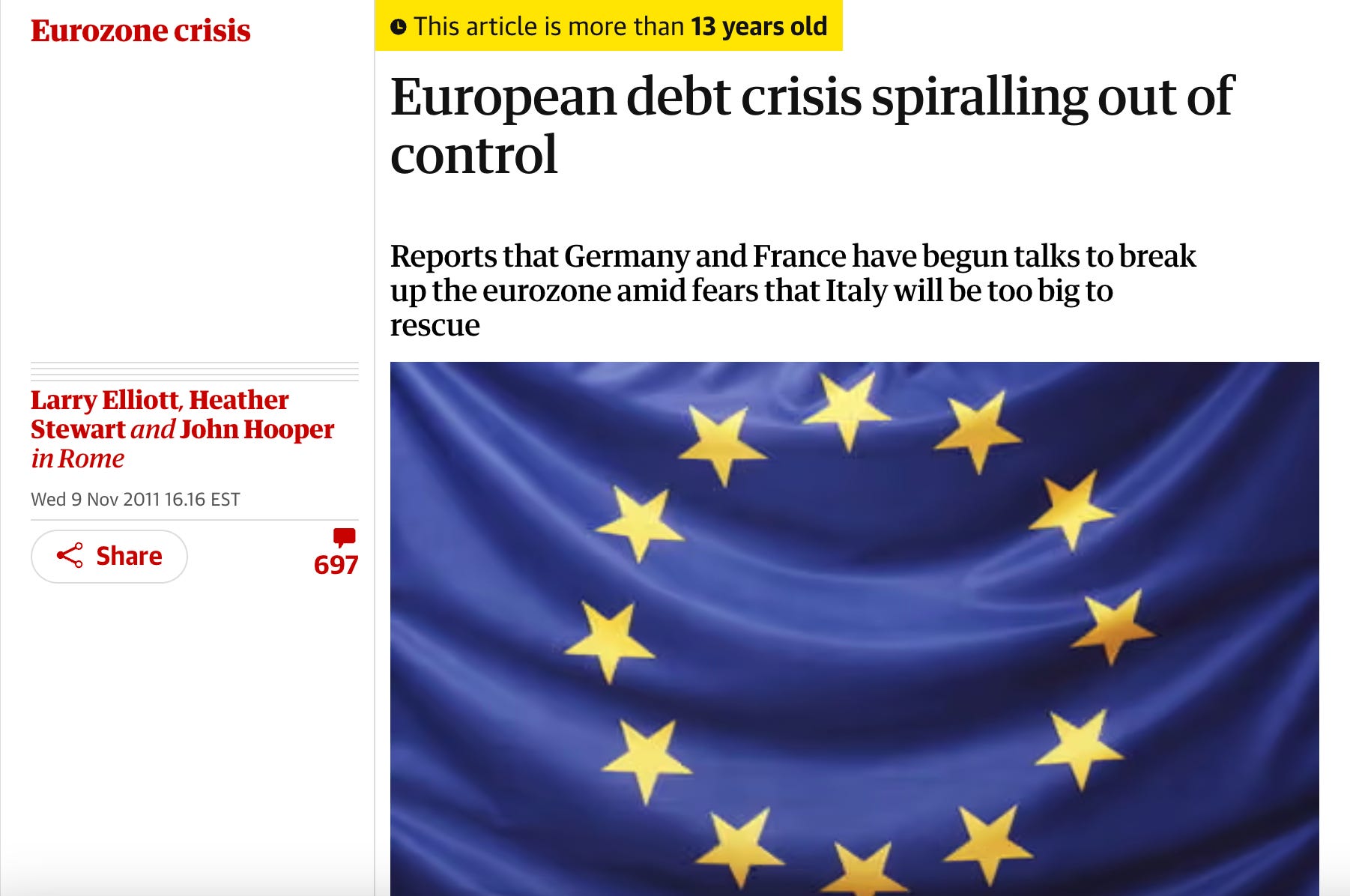
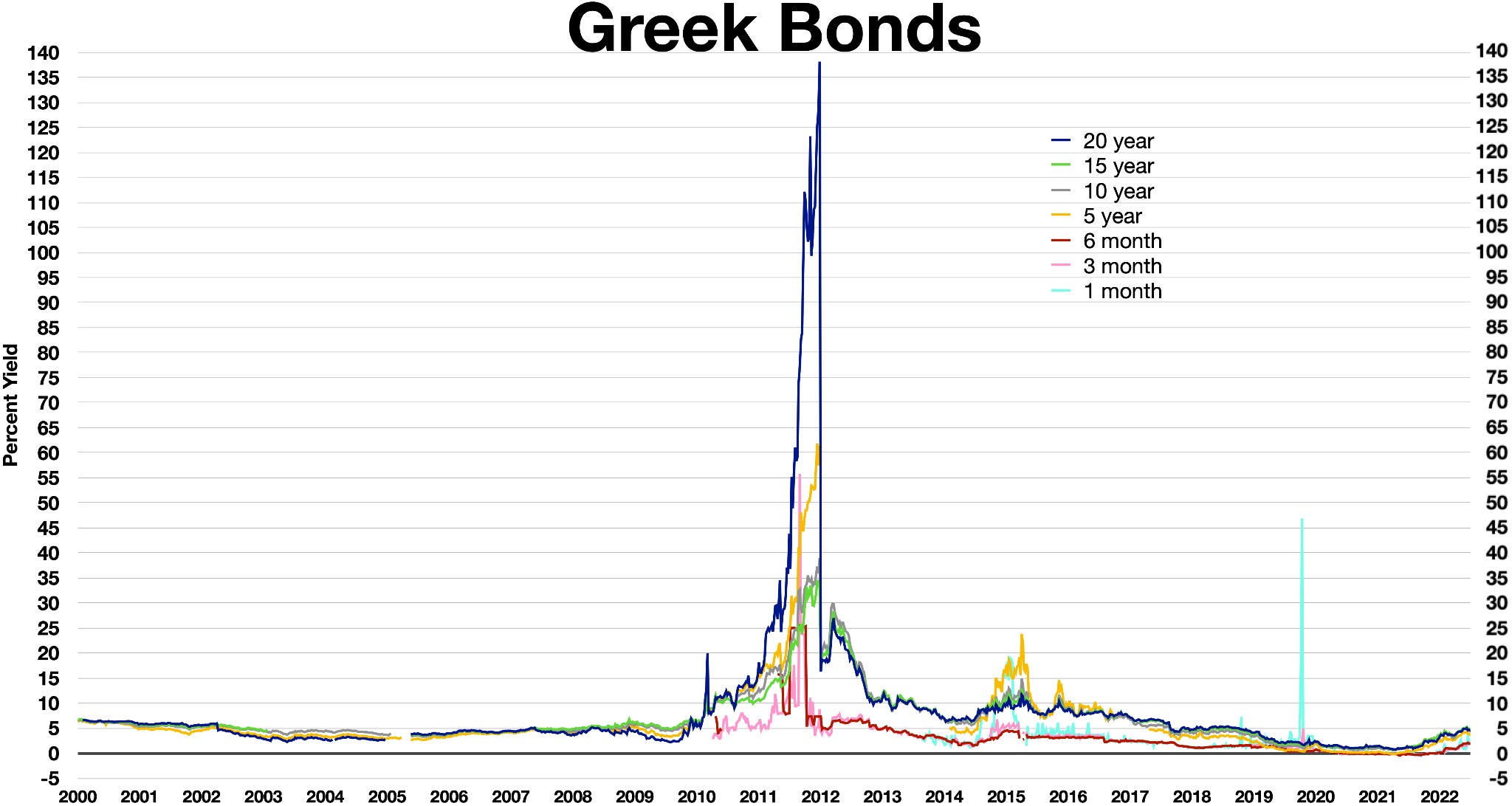
In late 2009, Greece's newly elected government revealed that previous administrations had been cooking the books, and the country's budget deficit was actually 15.4% of GDP, not the 3.7% previously reported. This bombshell sent shockwaves through European bond markets. Yields on Greek government bonds exploded from 4.5% to over 35% by early 2012, effectively locking the country out of capital markets.
But Greece was just the appetizer. The real feast of destruction came when contagion spread to the European banking system. European banks held approximately €500 billion in Greek, Portuguese, Irish, Spanish and Italian government bonds on their balance sheets. As these bonds plummeted in value, banks faced massive unrealized losses that threatened their solvency.
The feedback loop was vicious: banks held sovereign debt, sovereigns needed functioning banks to buy their debt, and both were hemorrhaging credibility by the day. French banks alone had €56 billion in exposure to Greek debt, while German banks held €34 billion. When you include exposure to Ireland, Portugal, Spain and Italy, German banks were sitting on over €500 billion in potentially toxic sovereign debt.
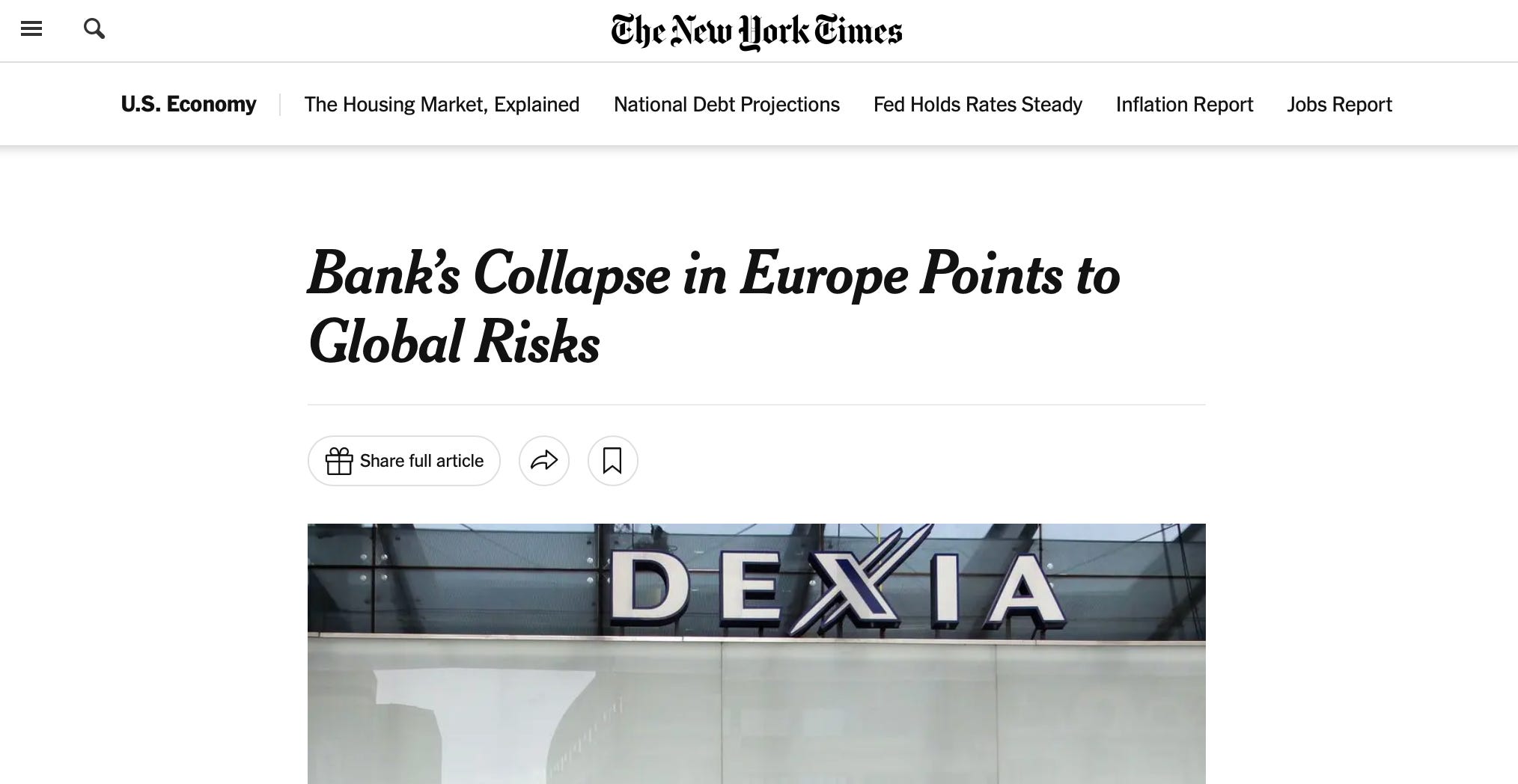
By mid 2011, the crisis had metastasized into a full blown banking panic. Dexia, a Franco Belgian bank that had passed the European Banking Authority's stress tests just months earlier with flying colors, collapsed in October 2011, requiring a €90 billion bailout. The stress tests had assumed that sovereign debt was risk free; a assumption that was now laughably naive.
Spanish banks were next on the chopping block. Having gorged themselves on real estate loans during Spain's property bubble, banks like Bankia found themselves with €184 billion in problematic real estate assets. The Spanish government's attempt to merge weak cajas (savings banks) into Bankia only created a bigger zombie that would eventually need a €24 billion bailout.
Italian banks weren't far behind, with Monte dei Paschi di Siena, the world's oldest bank, teetering on the edge of insolvency. The bank had €48 billion in Italian government bonds on its books, representing 140% of its tangible equity. As Italian yields spiked above 7%, MPS was technically insolvent.
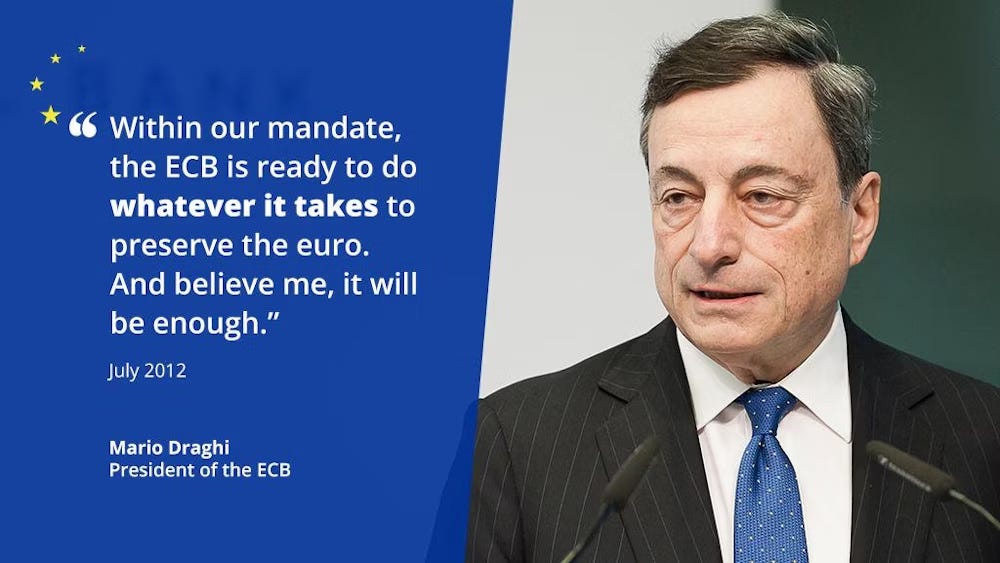
Enter Mario Draghi, the newly appointed ECB President who would utter three words that temporarily saved the eurozone: "whatever it takes." In July 2012, Draghi announced the Outright Monetary Transactions (OMT) program, essentially promising unlimited purchases of distressed sovereign bonds. The ECB had finally discovered the infinite money printer, just like the Bank of Japan had.
But this wasn't a cure; it was morphine for a patient with terminal cancer. The OMT program, followed by successive rounds of liquidity injections totaling over €2.6 trillion, did lower sovereign yields and ease the immediate banking crisis. However, it created a new problem: zombie banks kept alive by central bank liquidity, unable to lend productively but too big to fail.
European banks became addicted to ECB liquidity like junkies to heroin. The Long Term Refinancing Operations (LTRO) saw banks borrow €1 trillion at 1% interest, only to turn around and buy sovereign bonds yielding 5% or more. This "carry trade" looked profitable on paper but did nothing to address the underlying insolvency issues.
What Brussels doesn't want you to know is that the 2011 crisis never really ended; it was just swept under the rug. European banks were estimated in 2020 to be sitting on €1.4 trillion in non performing loans, with Italian banks alone holding €135 billion. The ECB's negative interest rate policy, designed to spur lending, has instead crushed bank profitability. Net interest margins for European banks have collapsed from 2.5% in 2007 to less than 1% today.
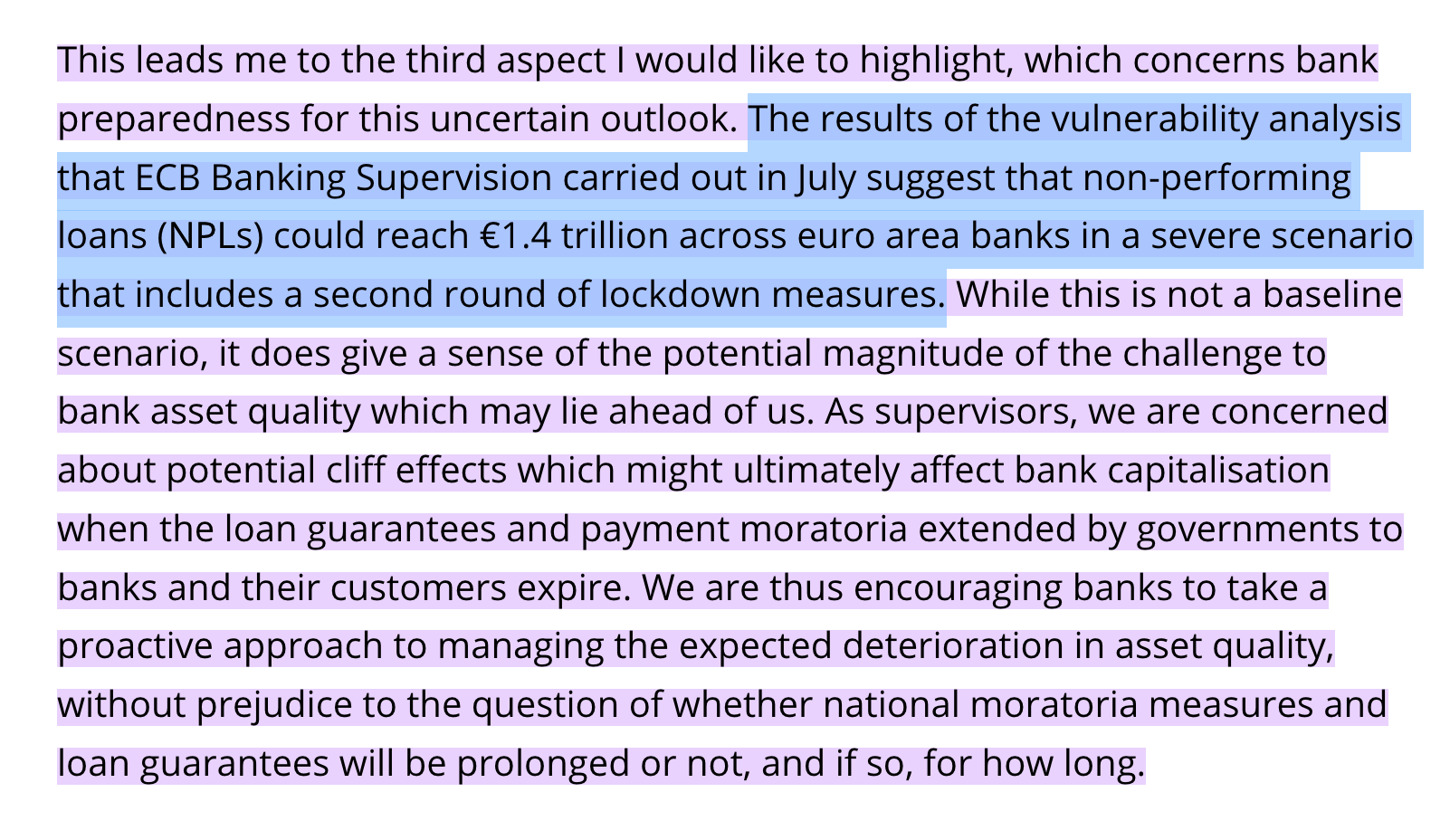
Deutsche Bank, once Germany's crown jewel, has seen its stock price fall 90% from its 2007 peak. Credit Suisse, before its dramatic collapse and UBS acquisition in 2023, was trading at just 0.2 times book value. These aren't healthy institutions; they're financial zombies stumbling forward, one ECB injection at a time.
The situation is even more dire when you consider Europe's demographic time bomb. With birth rates below replacement across the continent and pension obligations soaring, European governments will need to issue massive amounts of new debt in the coming decades. But who will buy it? European banks are already stuffed to the gills with sovereign debt, holding over €3.7 trillion, and their capacity to absorb more is limited.

This brings us to the real reason Brussels is pushing so hard for a Central Bank Digital Currency. The ECB has fast tracked development of the digital euro, with President Christine Lagarde stating they aim to have it operational by 2026. They claim it's about "monetary sovereignty" and "payment innovation," but let's call it what it really is: a desperate attempt to maintain control over a failing system.
The 2011 banking crisis taught European elites a valuable lesson: traditional banking systems are too fragmented, too opaque, and too difficult to control. A CBDC solves all these "problems" by creating a single, centralized, fully surveilled monetary system where every euro is tracked from creation to destruction.
The push for a digital euro also reflects Europe's desperate attempt to break free from dollar hegemony. European banks currently need dollars for international trade, commodity purchases, and to service the $12 trillion in dollar denominated debt issued by European corporations. But with the Fed weaponizing the dollar through sanctions and SWIFT exclusions, Europe finds itself uncomfortably vulnerable.
A digital euro, they hope, could provide an alternative payment rail for international trade, one outside American control. The ECB has been quietly working with China on digital currency interoperability, hoping to create a parallel financial system that bypasses the dollar entirely. But this is fantasy: no amount of digital innovation can overcome the fundamental economic weakness at Europe's core.
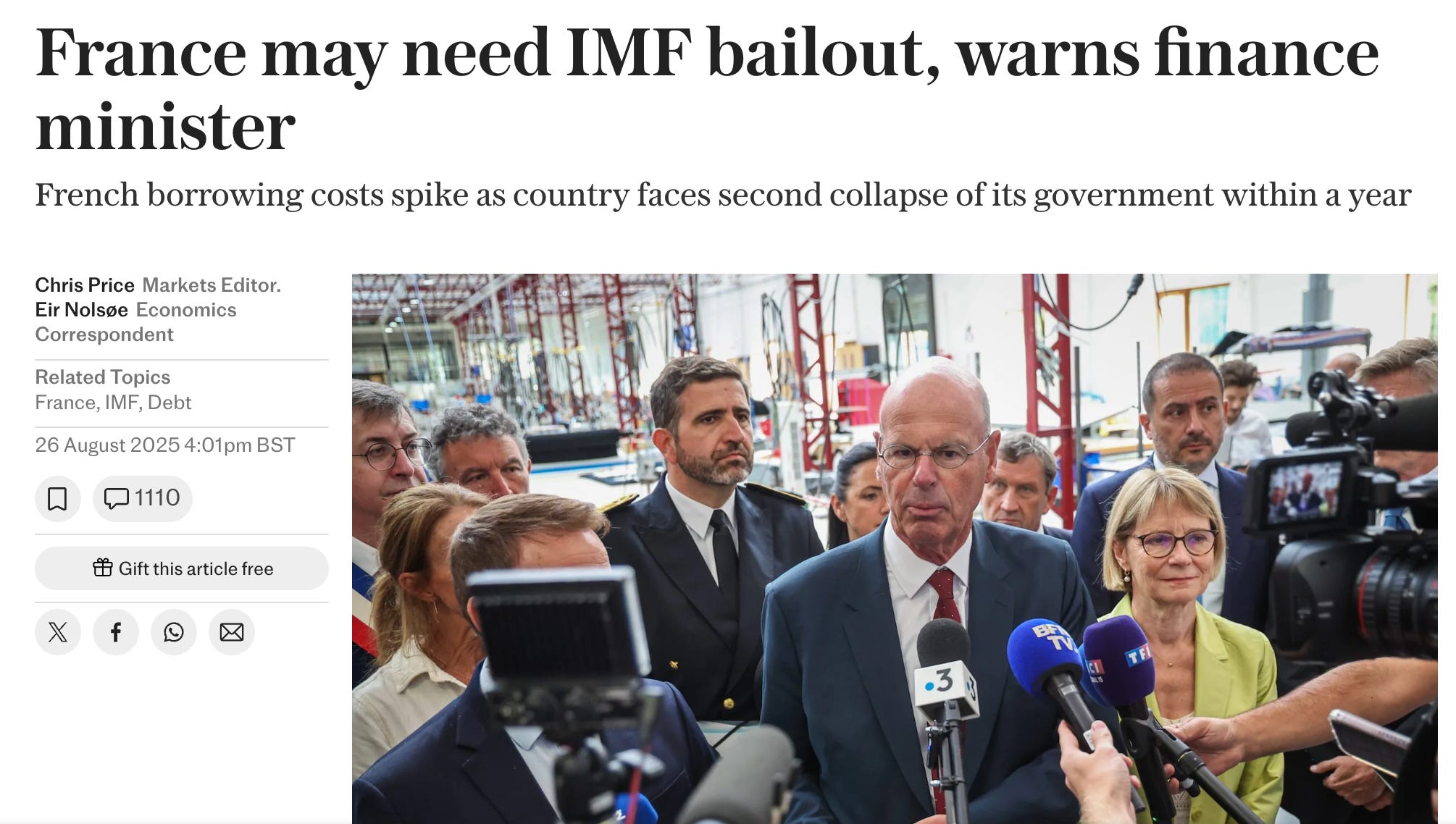
But why is Europe moving so aggressively toward a digital euro right now? The answer lies in the eurozone's deepening structural crisis. On September 8th, 2025, France's government collapsed after losing a confidence vote, with deficits spiraling and rumors of an IMF bailout circulating. This is the eurozone's second-largest economy being treated like a struggling emerging market.
Italy's debt load stands at a staggering 140% of GDP, with an economy stagnant for two decades. Rome survives only because the ECB props up its bond market through perpetual QE, a policy that is becoming increasingly politically toxic.
Even Germany, the supposed anchor of European stability, is slipping. A manufacturing recession, soaring energy costs, and collapsing exports mean Berlin can no longer bankroll Europe as it once did. Across the continent, sovereign debt has piled above €13 trillion while political centers collapse and populist movements surge.
The eurozone faces a unique structural problem that distinguishes it from other major economies. Unlike the United States, Europe can't simply inflate away its debt, at least not as easily as other countries. The Federal Reserve can print dollars, Washington can run trillion-dollar deficits, and the world absorbs it because the dollar remains the global reserve currency. The ECB operates under different constraints.
Every major ECB action requires consensus across 20 member states, which is a nearly impossible task when Brussels can't even achieve unanimity on sanctioning rogue members like Poland and Hungary. The pandemic's Recovery Fund was a one-off emergency measure. Massive fiscal transfers are politically dead. Traditional QE faces legal and social constraints. Foreign creditors can't be trusted in an era of intensifying geopolitical competition.
This leaves only one remaining pool of capital: private savings. Approximately €10 trillion sits in European households, mostly in low-yield deposits. For Brussels technocrats, this isn't private wealth- it's "idle capital" representing a loss to society. The logic behind the new Savings and Investments Union is to redirect citizens' savings into Brussels' priorities: green energy, defense spending, technology development, and pension obligations.
Here lies the hidden purpose of the digital euro. It's not being built despite Europe's crises- it's being built because of them. With a CBDC, Brussels wouldn't need parliamentary approval or unanimous consent from member states. Every euro would exist on a ledger they control, allowing instant mobilization of private savings according to centralized priorities.
The ECB has been surprisingly transparent about this ultimate goal, even posting on social media platforms about the need for greater control over monetary policy and savings allocation.

The ECB claims that the core features of the digital euro are needed for it to operate properly. Let’s cover these features quickly.
First, the CBDC would be a central bank liability. This means the currency would be issued and managed by the ECB, but day-to-day distribution and user interface would be handled by banks. But, the ECB has stressed that banknotes and coins will remain legal tender alongside a digital euro. This is little more than marketing.
What they don’t tell you is that cash will become increasingly useless in a world dominated by digital currencies. And that requiring all banks and businesses to use CBDCs means that they can demonetize cash at will.
They also claim that CBDCs will offer “cash-like” privacy for small, offline payments, meaning that when a payment is made offline only the payer and payee would know the transaction details. The Eurosystem would not be able to identify who is paying whom in routine low-value transactions. Again, nice marketing.
The reality is CBDCs by design are centralized. Everything must settle on the central bank’s ledger, and they will therefore have a first-hand view of every transaction you make and every person or business you interact with. Privacy is impossible.
Offline functionality is explicitly proposed because the Eurosystem wants the digital euro to replicate the resilience and universality of cash even when networks fail. They say this is in case of natural disasters.
Technical proposals range from secure hardware elements like smart cards or direct device-to-device validation protocols. This would let two wallets transact without an internet connection, and then reconcile with the central ledger once reconnected. They would track all your transactions, even when you’re off grid.
There would be no escape.
The Commission is also supposedly worried about bank runs. Their legislative proposal and ECB documents describe holding limits for private individuals’ CBDC balances. Public analysis and policy discussion currently put the likely cap in the low thousands of euros for most retail users, Bruegel and other analysts have discussed a working range around €3,000–€4,000. businesses would face different rules or be excluded from holding retail digital euros as a store of value.
Lastly- the lynpin of the entire idea. Programmability. The Commission’s draft regulation and several official statements emphasise that the digital euro would not be programmable in ways that would allow authorities to restrict purchases of specific goods or to encode targeted, long-term behavioral controls into money. They say that is too Orwellian.The baseline design excludes features like hardcoded purchase restrictions; nevertheless, programmable constructs for legitimate public policy uses. Things like time-limited incentives, or conditional transfers for social policies, continue to be discussed cautiously, with strict legal and governance safeguards.
But they’re lying.
Creating account limits, or imposing interest rates, means the money has to be programmable in some form or another. They promise that they won’t abuse this power to enforce social credit scores or a carbon credit system- but that’s all that is.
A promise.
Europe has already tested this strategy. During the 2013 Cypriot financial crisis, the EU implemented capital controls and bank deposit confiscations, seizing funds directly from citizens' accounts to bail out failed banks. Cyprus served as a proof-of-concept for using private savings as a crisis response mechanism.
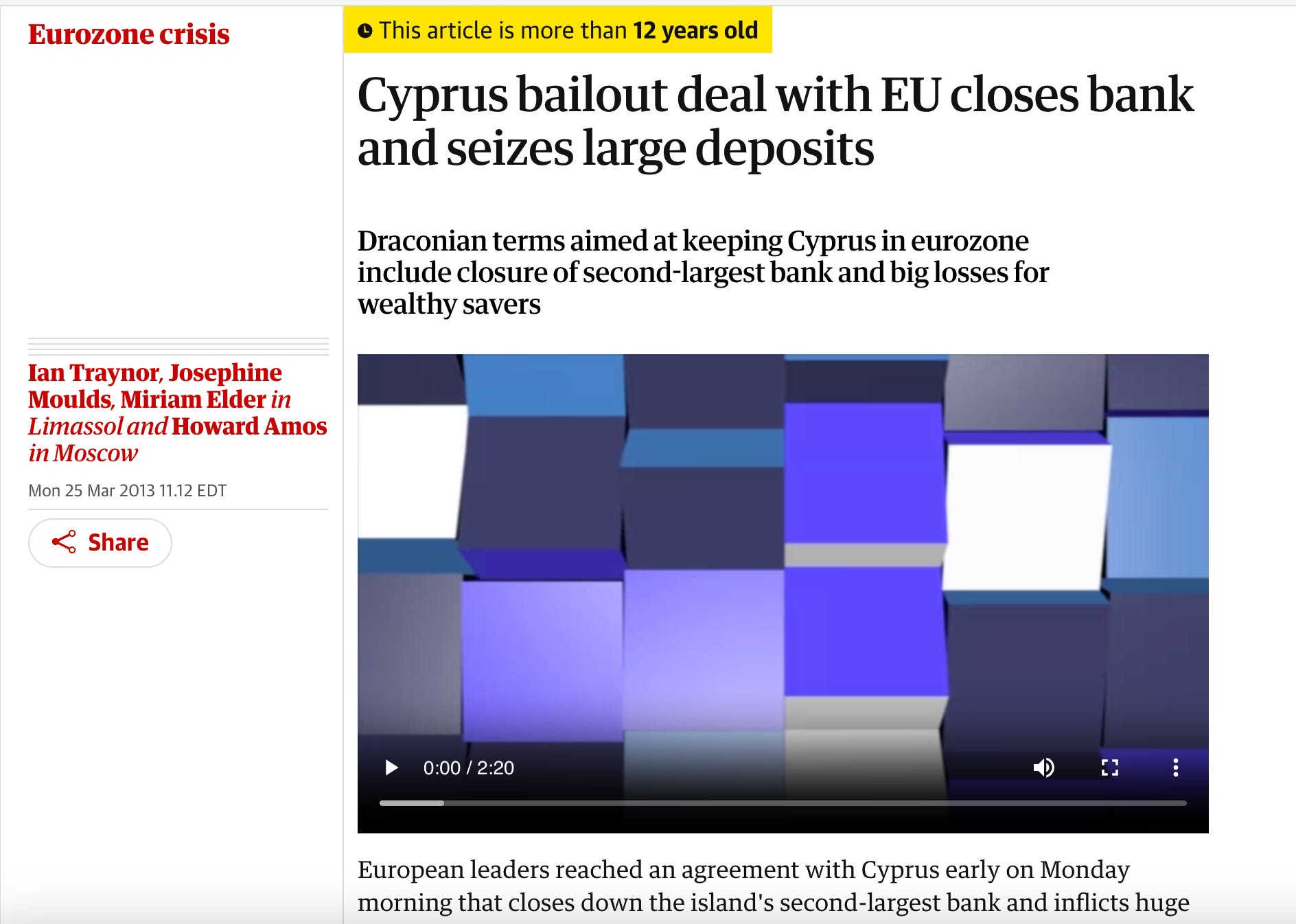
The digital euro would make such confiscations seamless and instantaneous. No parliamentary debates, no legal challenges, no bank runs- just algorithmic reallocation of "idle capital" according to technocratic priorities.
Even more terrifying, the European Central Bank's technical documentation reveals the comprehensive surveillance apparatus being constructed. Every digital euro transaction would be recorded on a distributed ledger controlled by the Eurosystem, creating an unprecedented database of economic activity.
Transaction monitoring would operate at multiple levels: real-time analysis for suspicious patterns, historical tracking for behavioral profiling, and predictive modeling for preemptive intervention. The system would integrate with existing financial intelligence networks, tax authorities, and regulatory agencies across all member states.
Smart contracts embedded in the currency code would enable automatic policy implementation without human intervention. Negative interest rates could be applied instantly to discourage saving. Spending restrictions could be activated during declared emergencies. Geographic limitations could prevent capital flight during crises.
The implementation of CBDCs represents more than monetary innovation- it's the final step in the consolidation of financial power that began with the creation of central banks centuries ago. What started as institutions designed to provide stability and liquidity has evolved into mechanisms for unprecedented economic control.
The traditional monetary system, despite its myriad flaws, maintained certain checks and balances. Commercial banks competed for deposits, governments faced borrowing constraints, and citizens could hold physical cash outside the banking system. CBDCs eliminate these friction points, creating a seamless mechanism for capital allocation according to centralized priorities.
The implications extend far beyond economics-
Political dissent becomes impossible when authorities can freeze accounts instantly.
Economic privacy disappears when every transaction is recorded and analyzed.
Market mechanisms are replaced by algorithmic planning when spending can be programmed and directed
Physical cash, despite official assurances, would become increasingly marginalized in a CBDC-dominated system.
Businesses would face pressure to accept only digital payments, banks would discourage cash transactions, and government services would migrate to digital-only platforms.
Worse yet, the European CBDC experiment isn't isolated, it's part of a coordinated global effort to implement digital monetary systems that prioritize control over freedom, surveillance over privacy, central planning over market mechanisms.
What began with the abandonment of the gold standard, continued through the era of fiat currencies, and accelerated during successive financial crises, now reaches its logical conclusion: money that can be created, allocated, and controlled according to the whims of technocratic authorities.
The eurozone's structural problems, including unsustainable debt levels, political fragmentation, economic stagnation, cannot be solved through monetary gimmicks or enhanced surveillance. They require fundamental reforms to fiscal policy, regulatory frameworks, and institutional structures. CBDCs represent an attempt to avoid these necessary reforms by implementing technological solutions to political problems.
European citizens face a choice that will define the next century of economic development. Accept the digital euro and surrender financial autonomy to unelected technocrats, or demand preservation of monetary alternatives that maintain some degree of individual choice and privacy.
The stakes couldn't be higher. Once implemented, CBDCs create a one-way ratchet toward greater control. The infrastructure built today will be used tomorrow for purposes not yet imagined by today's policymakers. History demonstrates that powers granted during emergencies are rarely relinquished during periods of stability.
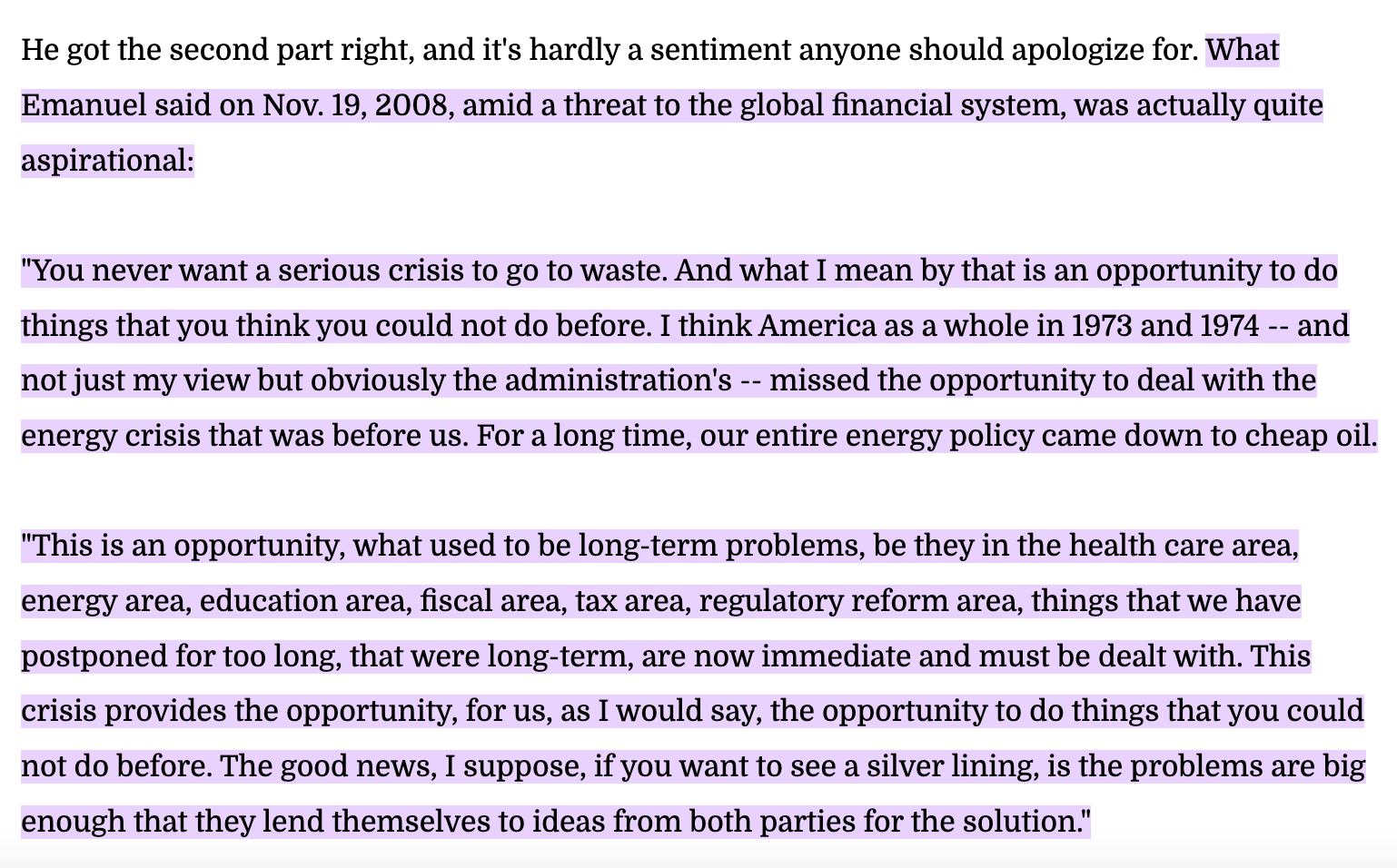
As Rahm Emanuel said, “Never let a serious crisis go to waste.”
The digital euro isn't Europe's salvation- it's the final nail in the coffin of European monetary sovereignty. And your savings are the currency being wagered in this desperate gamble to maintain control over a failing system.
The capital controls and geographic limitations is especially alarming. Amazing too that Germany and the UK don't dare touch their coal, and have made all of their own industries unworkable for it. There is no replacement energy source for oil, and they intend to trap every rich person they can inside Europe to tax them to death. Makes you wonder then too how so many wealthy families (true wealth, both concurrently and historically) have managed for so long (I assume trusts, charities, all sorts of legal loopholes). But for a prole like me, it would spell certain slavery
Got Bitcoin?