
The Safe Room
China’s property crisis has not stabilized. The developers were just the first domino.

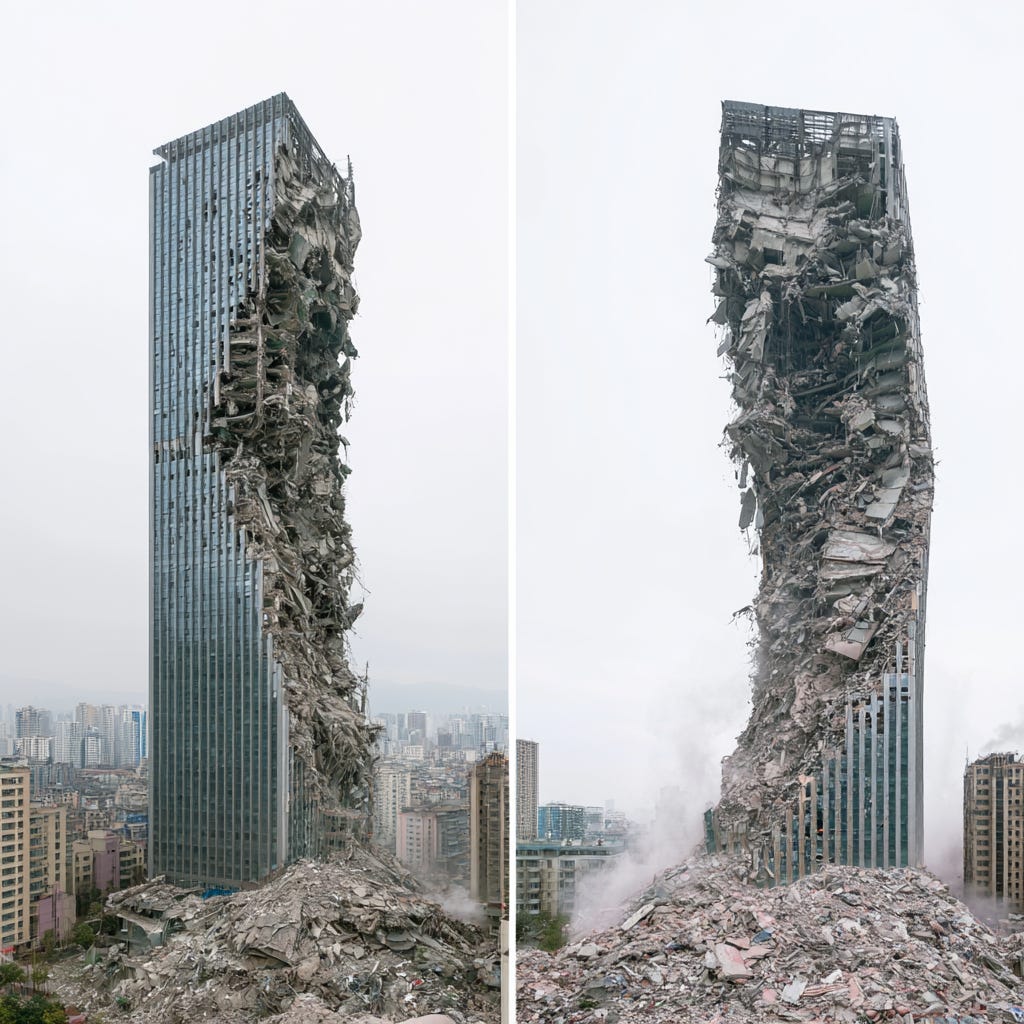
It’s been a while since I wrote about the ongoing Chinese real estate crisis. The situation has only gotten worse.
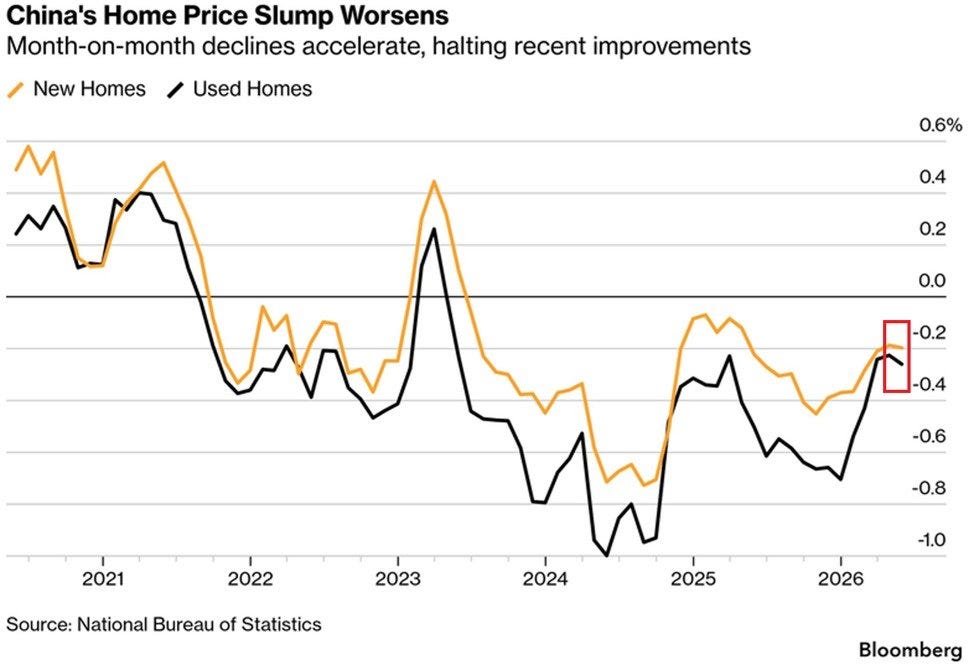
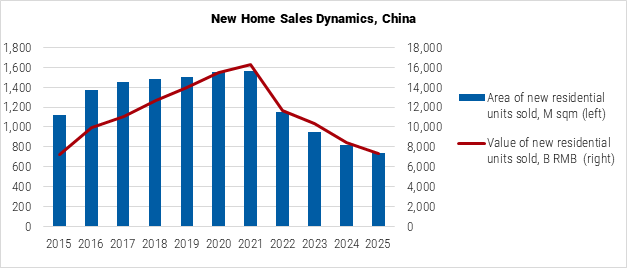
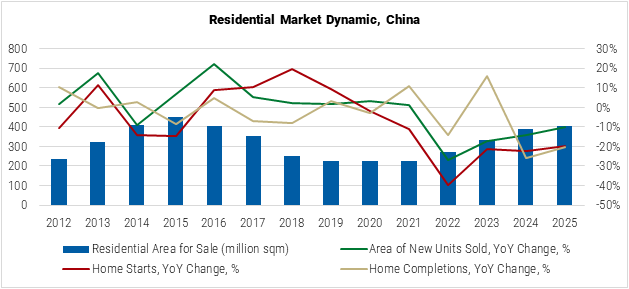
Secondary home prices in China have fallen for 44 consecutive months. Rents have declined for 23 straight months. Primary home sales are projected to fall another 10 to 14 percent this year alone, after a roughly 40 percent decline between 2021 and 2025.
In fact, S&P Global estimates that housing inventory stands 45 percent above pre-downturn averages. Morningstar’s Q1 2026 survey found that only 11 percent of Chinese respondents expected prices to rise in the next quarter, and just 17 percent planned to buy a home within six months. Demand recovery is not expected before 2027.
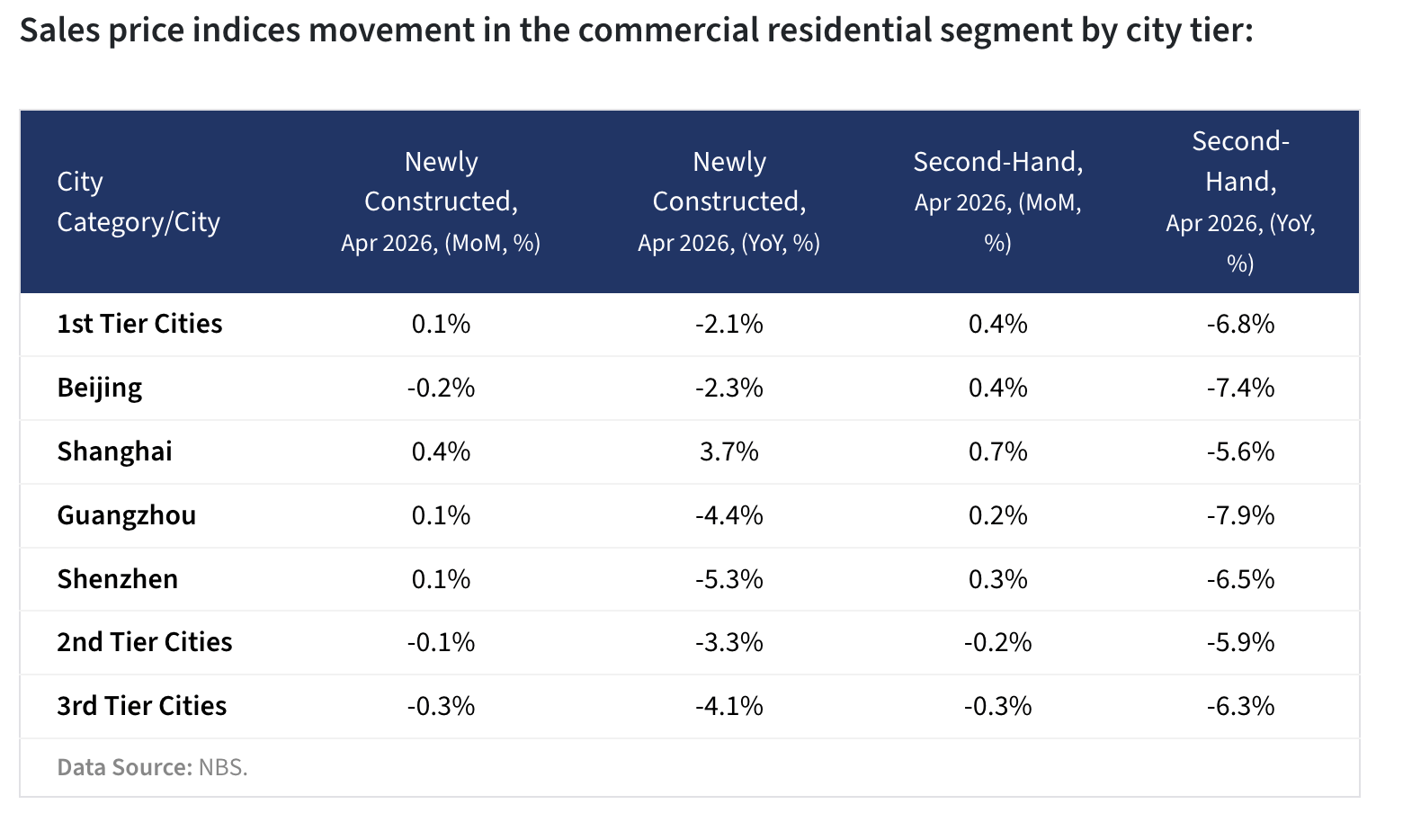
The mainstream financial press has spent two years telling you the worst is behind China. They were wrong every time.
What’s actually happening is a compression of one of the most consequential wealth transfers in modern economic history.
For three decades, Chinese households channeled their savings into one asset: property.
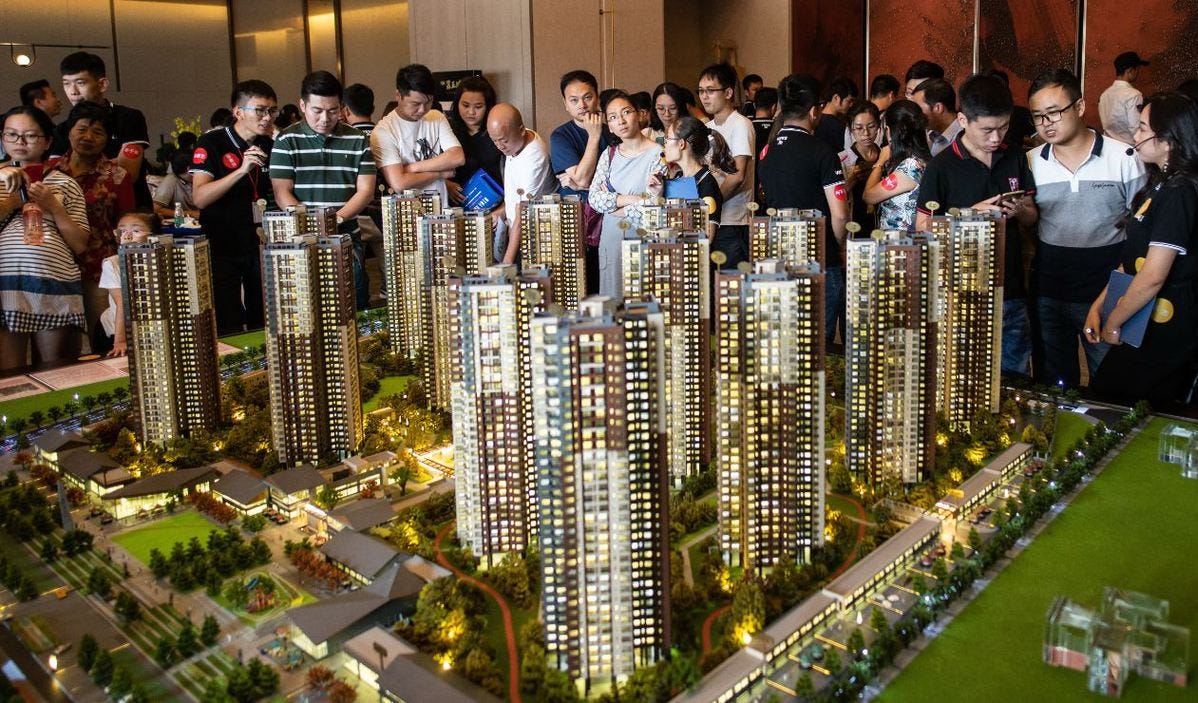
Real estate eventually represented roughly 70 percent of household wealth across the country. It was not speculation in the Western sense; it was a deeply cultural decision, the product of a financial architecture that left citizens with almost no other credible savings vehicle. Parents scraped together down payments across entire careers. Apartments were bought before they were built, sometimes before the land was even cleared. The real estate market was, for the Chinese middle class, what the S&P 500 is to an American 401(k): the foundation on which retirement was built.
That foundation is now crumbling. And 1.4 billion people are looking for another one.
For those of you who have been following my China arc from China Teeters through Paper Tiger and China’s Gamble, you know the developer story well.
Evergrande collapsed. Then Country Garden. Then Vanke started wobbling. Evergrande had held over $300 billion in liabilities. The real estate sector was so over-invested that it built entire ghost cities.
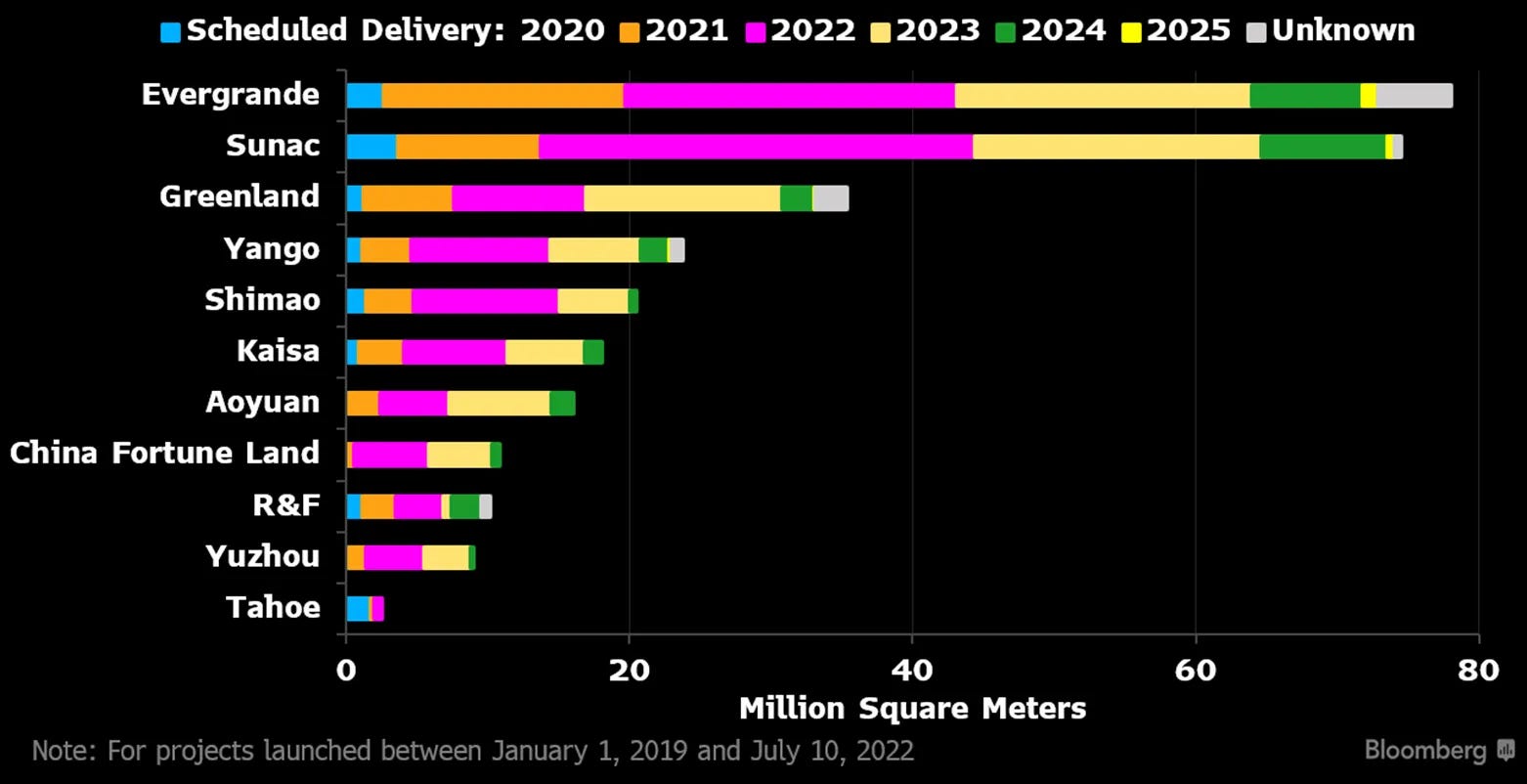
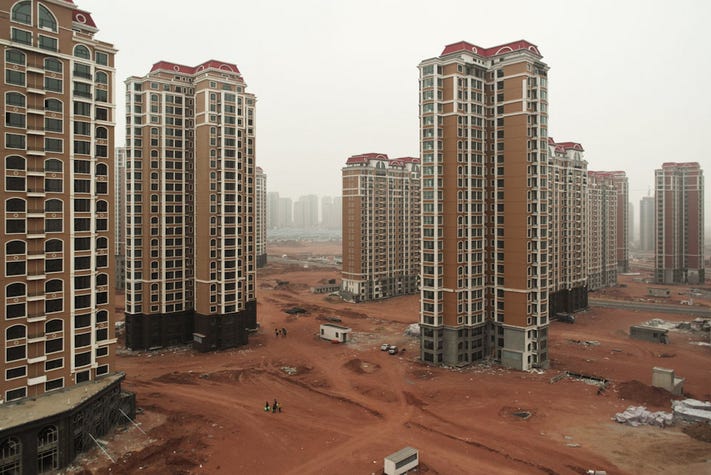
That meant that 48 million pre-sold units sitting unfinished across the country, trapping the savings of millions of families in concrete and rebar.
That’s the entire housing stock of GERMANY.
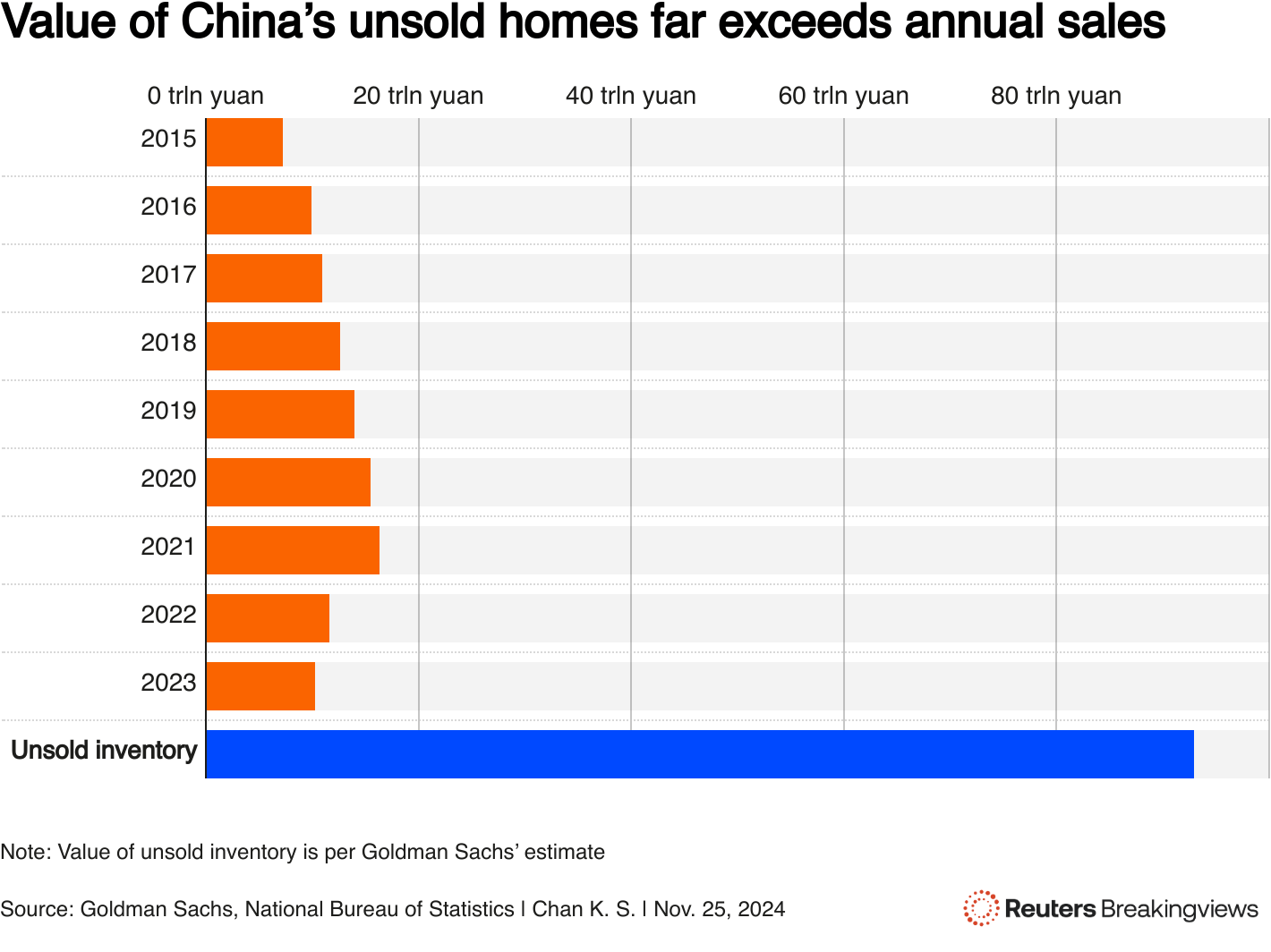
What I want to focus on is what came after: the layer of the crisis that was always going to be worse than the developers, and that the Western financial press has chronically underreported.
Local governments in China built the post-2008 growth miracle on a very specific financial architecture.
Because Beijing placed strict limits on how much local governments could borrow directly, local officials created off-balance-sheet financing entities, known as Local Government Financing Vehicles, or LGFVs.
These shell companies borrowed from state-owned banks, using public land as collateral, and deployed that capital into infrastructure: roads, bridges, industrial parks, high-speed rail connections to nowhere. The debt sat on the LGFV’s books, not the city’s official ledger. The city’s finances looked clean. The LGFV was the hidden heart of the machine.
This worked exactly as long as land prices kept rising. Local governments sold land to developers, collected the proceeds, and used those revenues to service the LGFV debt. Land sales were not just a revenue stream; they were the entire fiscal model. In some provinces, land revenue accounted for more than 60 percent of government income.
When the property market collapsed, land revenues went with it. State-owned land-use rights transfers collapsed to 4.15 trillion RMB in 2025, down 14.7 percent year-on-year. That is the fiscal fuel that runs a $17 trillion economy’s local government layer.
Now it’s gone.
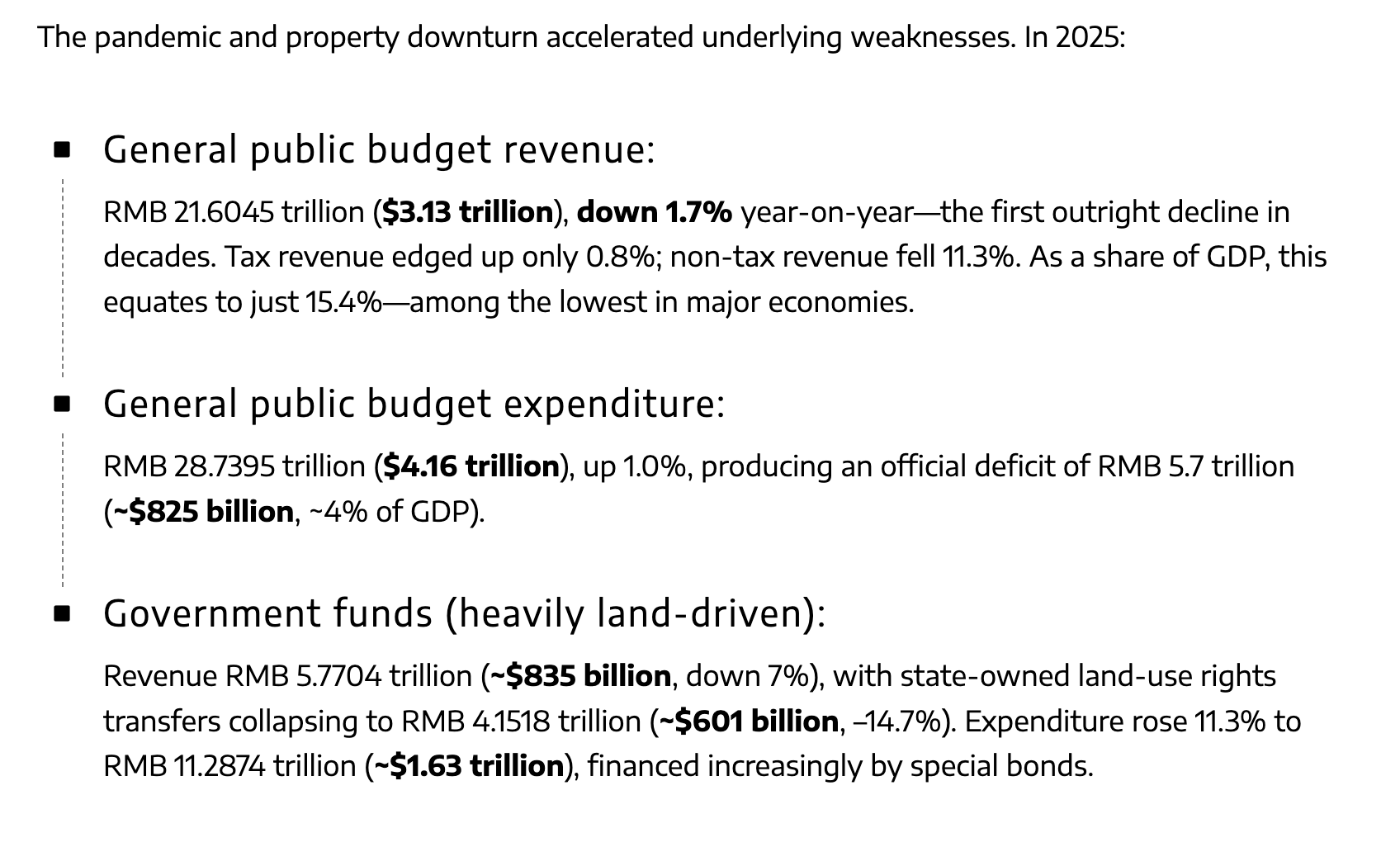
The IMF estimates total LGFV hidden debt at 60 trillion RMB, roughly $8.5 trillion USD, equivalent to 48 percent of GDP.
And here’s what that means:
